The Doctor Calls

Yesterday afternoon while I was waiting by the phone, the doctor had already called. He’d called the cell number I’d left the day I was in Gainesville so he could reach me on the road. Yesterday I’d left him the house number–my cell gets no signal in this house. This kind of thing has happened before.

We were waiting all day!

We were waiting all day!

He left me a long message. The summary goes something like this:

“I need more time. If Mick is still strong, I’d like to take the weekend. There are more records I want to pull. I have a pretty good idea what we have here, but I’ll need about a half hour to explain. I’m thinking it’s not just one disease, but several. By Monday I’ll have a plan and an estimate of the costs, and we’ll have to decide together if you want to do it all at once or in stages. If Mick isn’t okay this weekend, call me right away. Otherwise, let’s talk Monday. Plan for a half hour.”

Mick Goes to Gainesville

by Lisa Lanser-Rose

Gainesville

Hoping for an answer and a cure

As many of you know, Wednesday I took Mick to the University of Florida’s veterinary hospital. When we arrived, I discovered that the doctor who’d been given the case the day before had turned it over to someone more experienced. “Sorry you drove all this way,” Mick’s new doctor said, “but I’m going to need a few days to absorb all this.”

Absorb? Absorb? I thought about autoimmune destruction of gastric parietal cells and stopped myself from making a bad joke.

We sat together for over an hour. He’d read for awhile, ask a few questions, and kneel down to examine Mick. “I hate to tell you this,” he finally said, “but, your dog is . . . really interesting.” He said Mick either has an extremely rare genetic disorder, perhaps something wholly new, or a rare form of something common. “Either way, this is one for the medical books.”

After he left the examining room, his student doctor stayed behind. “I have a Border Collie too. I love her to death.” She hugged Mick’s file to her chest. “I’m the one who’s going to do all the grunt work on this case.” Her eyes burned with intelligence and determination. “I’m going to discover this disease and cure Mick, I promise you. We’ll call it ‘Mick’s Syndrome.’ Or maybe it’ll be named after me.”

Gainseville sent us home

UF Sent Mick Home

I smiled and wondered if I was too old for veterinary school.

Then, they sent us home to give them time to do their Mick homework–ordering more records, compiling charts and graphs, conferring with other experts, and doing research.

Anyone would be terrified if a deadly mystery illness attacked their loved one, especially one so young and full of promise as Mick. I’m remembering my friends whose children suffered. I’m in mind of the movie, Lorenzo’s Oil. Is there a Nick Nolte for Mick? Is it easier because he’s “just a dog,” or in some ways does that make it harder? I do know it’s especially painful because Mick is perfect for me. He’s exactly what I searched for: a well tempered little character, outgoing, sweet, and biddable, exceptionally well suited to my sociable nature and adventurous ways. 
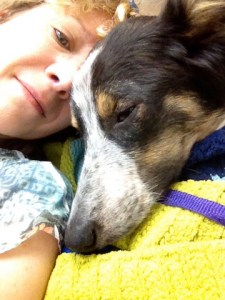
We're afraid we'll never be safe.

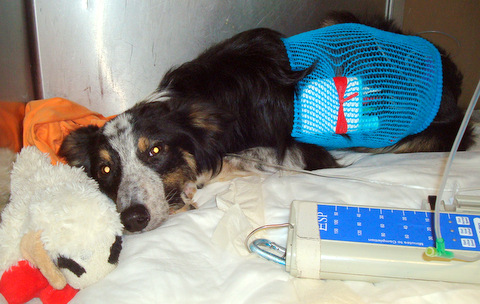
In the hospital.

Instead of simply taking over my life the way Border Collies do, Mick brought with him an occupying army of new words: eucobalaminemic, neutropenia, homocysteine, aciduria, hyperkalemia, cosyntropin, neoplasm, aldosterone, cardiac collapse, and immune-mediated hemolytic anemia.

One week I’m  wondering which is the best way to teach him not to jump up on people. The next I’m wondering if his neutrophils are trapped. Why is his cobalamin normal but his folate “in the basement?” What stole his ionized calcium? It was there July 2, gone July 17th! Were his white bloods cells pillaged before or after the septicemia? Nobody knows.

Alby loves his "brakkie."

Alby loves his sweet “brakkie.”

My husband and I were hunting for a house with a great yard for Mick. As the baffled doctors ordered increasingly obscure and expensive tests, we began to argue about when to “put on the brakes” and when to let Mick go. Mick’s illness waxes and wanes, and twice now it’s come on so strong it almost killed him. Both times we spent a staggering amount of money to save his life, but couldn’t put an end to the threat. We just had more mysteries and no answers. What’s the point of draining our savings if Mick is never going to enjoy his new yard anyway? The next attack could kill him.
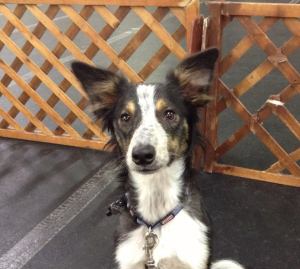
A Super-Awesome Dog

Mick at school: a super-awesome dog

In his good times, Mick’s puppy school and basic obedience trainers told me, “He’s a super-awesome dog. You two are fun to watch. You have a powerful bond.”

I’d beam and say, “Mick makes me look good.” The only thing I can take credit for is I sure chose well. Except for the deadly illness thing.

When he’s sick, doctors, specialists, nurses, and technicians look at me gravely and say, “Not a lot of people would have done this for him.”

They say, “He’s a really lucky dog.”

They say, “You’re a good mom.”

I’m touched, I’m flattered, but I’m also wondering: am I crazy?

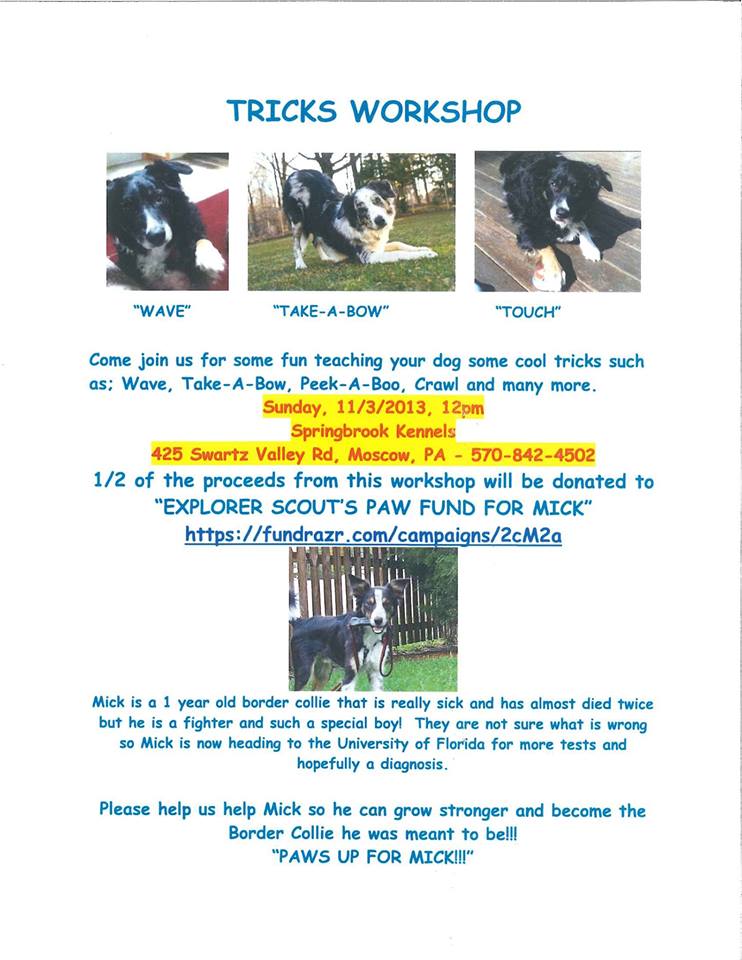
Pawfund raiserI don’t think so. I can’t think so. As Mick’s mystery persists and his medical bills mount, love and support have risen up around us and humbled me. On social and medical networking sites, Wendy Drake, Megan Biduck-Lashinski, and Terri Florentino have rallied to beat the clock, solve the mystery, and raise funds to save Mick’s life.

Thanks in part to their efforts, more and more doctors are examining Mick’s case. Doctors and their staff tell me they lie awake at night worrying about Mick. The young doctor at UF stayed up late reading his files with her pulse racing. “It was like a television show. I kept thinking, ‘Oh, no! Does he live? Does he live?'” That now depends in part on her. I told the doctors, you better do right by Mick–over a thousand people are watching you.
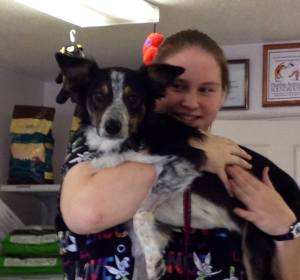
Everybody Loves Mick

Everybody Loves Mick

Mick isn’t just lucky to have me, he’s lucky to have us, a community of people who care passionately about what happens to him. If Mick has a special bond with me, he has a special bond with all of us. Are we all crazy?

If so, crazy makes for pretty great company.

You keep me going. And I have to keep going, not just for Mick but for any other dog and family who might be stricken with this disease. If the anguish and expense of this hit-or-miss, trial-and-error, roller coaster that we’ve been on can’t help Mick and others, what is it for? We must solve this for everyone. Consider this: how many other beloved dogs did this disease kill before anyone could identify it?

With such love around us, it’s impossible to give up hope. Mick’s ups and downs are exhilarating and harrowing. He’s medically fascinating. This would be really cool if it weren’t our Mick.

Taken today. "Throw. The. BALL!"

Taken today. “Throw. The. BALL!”

Mick is here. He’s not just an interesting medical case or a novelty pet with a cross on his forehead. He’s a sweet, talented, sociable young dog who’s yapping and wants me to throw his tennis ball NOW. A week ago I thought he was dead.  I’m exhausted and scared. How long will this round of good health last? Will the doctors solve the riddle in time?

For now, Mick is on an upswing. He’s had these before. Today Mick is having one healthy, boisterous hour after another. We’re going to go enjoy them while they last and hope the riddle is solved before next attack. I dread having to decide whether or not to let him, and his mystery, go.

Thanks to you, we’re far from that dreadful moment. His prospects are full of hope. You keep us going in every possible way. Thank you for caring, for keeping us company, and helping us save Mick.

Dusty, Part 1

How I Met Your Puppy

by Terri Florentino

“Our dog didn’t get the memo.” The man sat at the head of the dining room table, and the woman, having brought me a glass of water and placed a coaster on the table in front of me, sat herself across from me, both of them agitated. I sipped my water, set the glass on the coaster, and glanced at the cutie behind the baby gate, the cause of all this distress.

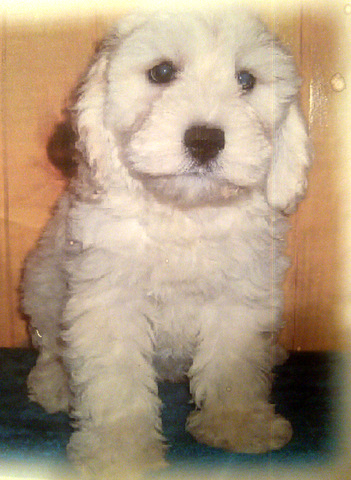
DustyPuppyThere sat the most adorable off-white young dog, his entire body a tumble of touchable, soft, little curls. For a young dog, barely fifteen months old, he sat strangely still, almost like a stuffed toy the kids had left behind. He was unnaturally expressionless, not even wiggling his tail. He just sat stiff and observed, as if miffed that things had come to this.

“What memo?” I said.

“The one that says a dog is man’s best friend.” The frustration in Robert’s voice was unmistakable.

“Tell me what happened.”

“I headed to bed where Dusty was sleeping next to Susan,” he said. “He always refuses to move out of my way when I try to get into bed, but this was the worst—he attacked me!”

Eyes filling with tears, Susan picked up the story with terror in her voice. “Dusty attacked. He tore Rob’s pajamas. He lunged at him again and again, biting him on his hips and arms.” Susan’s arms flailed as she described the trauma. “I flew out of bed, grabbed a pillow, and forced it between them. Dusty started tearing apart the pillow. He was like Cujo! He was savage! We couldn’t stop him!” She cried openly now. “Feathers were flying everywhere! I reached around the pillow, grabbed Dusty’s collar, and dragged towards the bathroom. He kept snarling and jumping at Robert.

Once I got him alone in the bathroom with me, he calmed down. I let him go, and he looked up at me as if to say, ‘Aren’t you proud of me?’ I was a wreck!” She wiped her eyes with her fingertips. “Who’m I kidding? I’m still a wreck.”

I glanced at the cute, curly-haired pup. Throughout the entire account of the violence he’d perpetrated, he just sat quietly, as if listening intently and agreeing, “Yes, that’s exactly how it happened, but as soon as you hear my side, you’ll understand my actions were perfectly justifiable.”

“Once he was settled,” Susan said, “I slipped out to get his leash, came back, and clipped it to his collar.”

“Good thing, too,” Rob said. “As soon as he saw me, he lunged at me again, growling like a mad dog. I swear to you, I’ve never laid a hand on this animal. I mean, look how cute he is. I’ve only been kind to him.”

Dusty just blinked behind his curls and licked his button nose.

Susan sighed, emotionally exhausted. “Can you help us, Terri?”

“I’ll do my best. We have a lot of work to do. Tell me where Dusty came from.”

“You sure you don’t want anything to eat?” Rob asked.

“No, thanks.” I heard children at play upstairs, and I wondered how Dusty had lasted this long. “Where did you get him?”

“My sister had the most lovable cockapoo,” Susan said, “which is why I chose this breed. I had no idea that not all cockapoos were created equal.” She’d done her research and found what she believed to be a responsible breeder on the Internet. She had to submit an on-line application. The breeder accepted, and Susan sent in a nonrefundable deposit.

The picture sent by the breeder.

Susan fell in love with the little guy in this picture.

“She let me choose my puppy based on a picture. I suppose that should have been my first red flag. She guaranteed her pups would have wonderful dispositions, and I trusted her.” Susan let out another sigh, Rob shook his head, and Dusty, behind his baby gate, slid down onto his elbows with a thump.

“Out of the blue, the breeder even sweetened the deal by putting my puppy on sale, dropping the price from a thousand to eight hundred dollars, the second red flag. She said she’d been ill and had too many puppies; she needed to move them quickly. That was red flag number three.”

Early on a Friday morning in 2007, Susan along with her young school-age daughter, Sarah, set out on their ten-hour, round-trip journey to pick up the family’s adorable new puppy. The weather was beautiful. Sarah was so excited, she had even passed up a chance to join her classmates on a school trip to the local amusement park.

“What should we name him?” Sarah said. “We still don’t have a name!”

“Why don’t we wait until we get him home to decide? This should be a family decision.”

“I can’t wait! I want to hold him and love him and kiss his little puppy nose.”

“You shouldn’t kiss his little puppy nose. He might have germs.”

“Cockapoos are too cute to have germs. The germs just bounce right off.”

As they neared their destination, they drove through a charming little farm community outside of Pittsburgh. They came upon a sign at the end of a driveway: “Professional Cockapoo Breeder.” They drove down the long driveway to a nice home with a well manicured lawn. As soon as they parked, Sarah and Susan jumped out of the car, eager to meet their furry new family member.

A young woman came outside to meet them. Susan was surprised; the woman with whom she’d been exchanging emails had seemed older. The young woman held out her hand and said, “I’m her daughter. My mother’s sorry she’s not available to meet with you.” She turned to Sarah. “Are you ready to see your puppy?”

“Yes, yes, yes!” Sarah said and jumped up and down.

“Okay, then. Great. Follow me.” And she led them inside.

Keeping Mick

Mick is always ready for anything.

Mick is ready for anything.

Terri and I want to apologize and thank you for your patience. Our work here has come to a halt since Mick, of “Finding Mick,” suffered his second mysterious and potentially fatal health crisis. I’ve been distracted, distraught, and exhausted. Terri, with the help of her friend and colleague Megan Biduk-Lashinski, has been researching and networking, doing her part to save him.

Ears!

The Ash Wednesday Dog

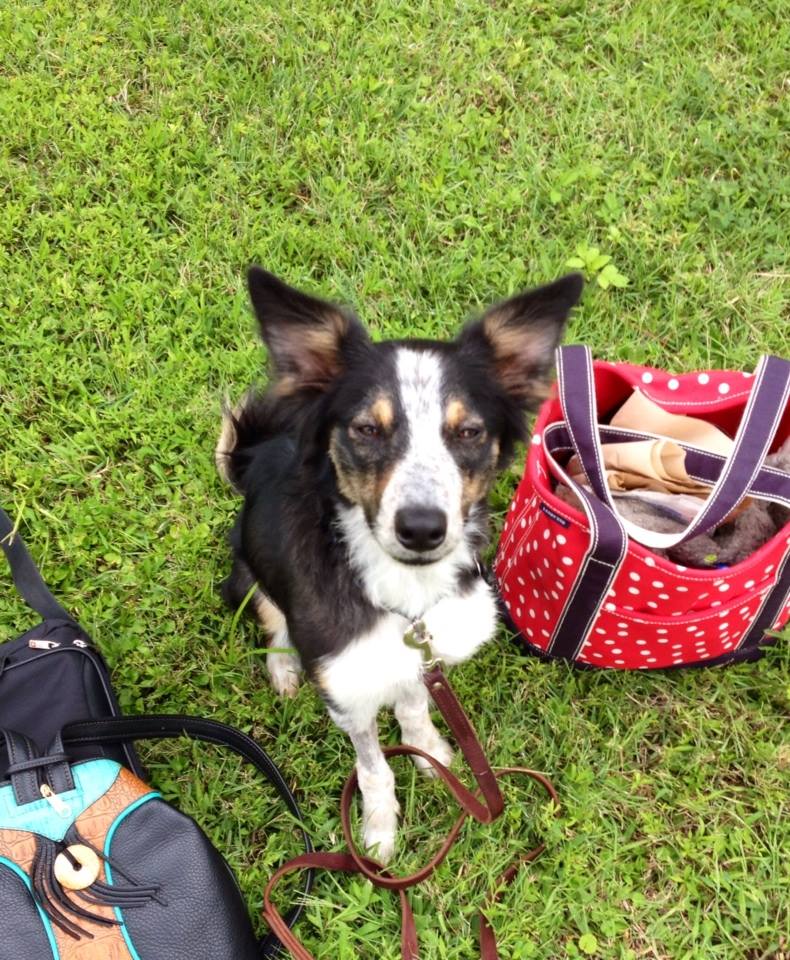
Born with the mark of a cross on his forehead, Mick is the inspiration for the “Inquisitor” in our name and the model for many of our posters and promos.

In September he turned one year old. He was the runt of his litter, but I didn’t choose him because he was small and frail. Quite the opposite–he was small, yet anything but frail. I wanted a courageous, independent, outgoing canine partner, a dog who could meet the world with a frank and friendly attitude. Mick has been that dog.

P1040081

Mick likes to help me with my chores.

I expected Mick to be hard-headed. I was braced for a disciplinary challenge, but he turned out to be eager to please me always.  He’s been at my side wherever pet laws allow, and then some. He’s completed puppy class and beginning obedience and is slated for introduction to agility. I teach in a public school, where Mick instantly became a beloved mascot. He frequents local businesses and restaurants. Around town, people are starting to recognize him, “Oh, that’s the famous Mick!”

His failure to thrive began early. We’ve spent a lot of time in local pet food shops, where his charm inspired employees to try to find a food to please and nourish him. Like many of his breed, he’s spooky-smart, but he’s also sublimely sweet, unflappable, and ready for anything.

His last trainer said, “I’ve seen a lot of awesome dogs. Mick is a super-awesome dog.”

Mick with his Uncle Pike.

Mick tries to keep up with his Uncle Pike.

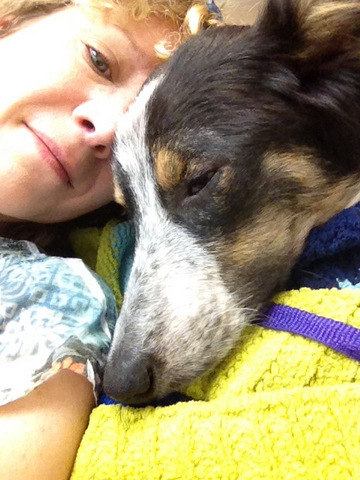
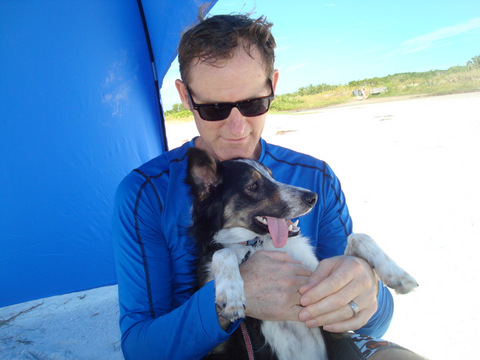
DSC06785This past July Mick spent eight days in intensive care. Last week, he again required round-the-clock care, this time for four days. As in July, doctors have run every test they can think of to figure out what’s trying to kill our Mick. Again and again, test results come back normal–or if they’re abnormal, they’re mystifying. It’s now clear that Mick is fighting a rare and deadly disease. He’s been recovering quickly from his latest “crash,” but we’re still waiting for a diagnosis and praying for a cure.

P1030446While we await the latest test results, Mick is back at home and gaining strength. Terri and I began work on a new series of “Dusty” stories for you. We’ll keep you posted about Mick’s outcome.

It was a long journey finding Mick. It’s been a long year trying to keep him. I feel certain we’re close to a diagnosis and a cure. He loves and is loved by way too many people–nobody’s losing Mick!

Love Me, Love My Lookalike

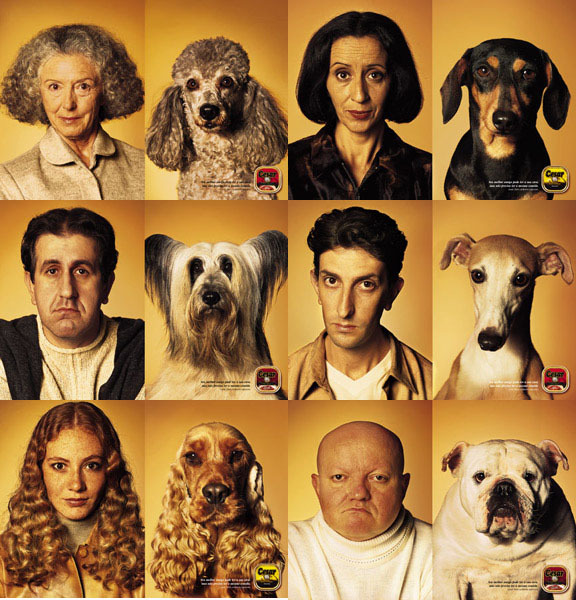
Do You and Your Dog Look Alike?

by Lisa Lanser-Rose

dogsowners

From Cesar Canine Cuisine

We want to see! Email us your photos and a few words about the two of you to bordercollieinquisitor@gmail.com. We’ll feature you and your lookalike in our special Twins Issue.

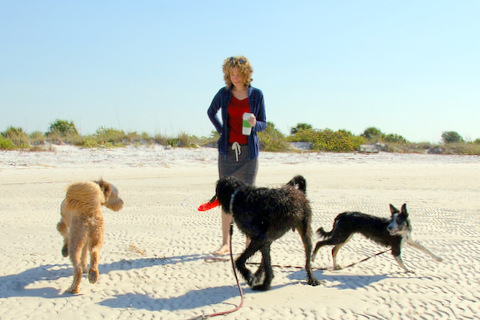
Studies confirm that people tend to choose dogs who look like them. Vanity? Familiarity? Call it what you will, but it’s human nature. In this picture, I’m with three dogs. If you didn’t know us, which one would you think was mine?

IMGP8298

Even though I love my little Border Collie Mick to pieces, if I had to choose among these three, I might have chosen the tall, curly-haired, golden Labradoodle. I felt a powerful, inexplicable connection between us . . .

We’d love to see you and your best lookalike friend. Email us your photos and a few words to bordercollieinquisitor@gmail.com for our special Twins Issue, coming soon.


Finding Mick, Part 7

You and Me, Casey

by Lisa Lanser-Rose

Casey's not going anywhere.

Casey

After moving my only immediate family member out of my house, I drove the forty-five minutes home thinking about everything other than the fact that I’d just cut my heart out and stored it in a cement-block dorm room. When I got home, I took Casey outside to play Frisbee, just as we did every day. Delaney might as well have been over at a friend’s house for the afternoon. I sat on the grass, and Casey dropped her Frisbee near my feet and whined until I threw it. When I did, rather that rocket after it the way she used to, she watched it sail and skid onto the grass, then whined at me. We weren’t the creatures we once were, she and I. “I can’t reach it,” I said, and she fetched it. I threw the Frisbee and Casey panted to and fro, stopping occasionally to drink out of my water glass, which made it her water glass.

Against the horizon in my mind, the sails of dark thoughts approached: my mother, my stepfather John, my father. Casey was in her final years, but for me, there were more to come. . . . I decided I had stuff to do. I got up, and we went into the kitchen, but when we got there, it turned out I had nothing to do in there.

So I took the stairs two at a time, Casey behind because she wasn’t fast enough anymore to head me off the way Border Collies do. When I burst into my bedroom, I stopped short, and Casey bumped into me. I had nothing to do in my bedroom either.

I veered toward the rubble in Delaney’s bedroom, but at the sight of my only child’s ransacked room, a howl rose in my throat. Casey knocked into me, and I closed the door before I made a noise.

Casey and I swerved and trotted down to the kitchen. I had people to call—my mother and my friend Nina, or maybe someone in the tribe, or maybe Fred or Dan or Vito, three men whom I kept as friends as long as we never discussed falling into love or falling into bed. But when I sat on the kitchen stool and picked up the phone, I was wrong about that, too. I put the phone back on its charger.

I'm here! I'm here!

I’m here! I’m here!

Casey suggested we try the living room and led me in there, but I couldn’t think of anything to do there, either.  She looked at me sideways, her jaws parted slightly in a leering pant. Her body seemed padded and ponderous as she stepped toward her orthopedic dog pillow, glancing back at me over her shoulder to see what I thought of her suggestion that we maybe lie down on it together for a while?

We tried that. I stroked her shoulders and face, and she put one paw on my chest and pushed until her elbow locked, keeping me at arm’s length. She’d always done that, as if she liked being close, but not too close. We lay there for several ticking minutes. Her eyes closed. Her locked leg vibrated. The air conditioning shut off. The refrigerator shut off. On nearby I-19, the traffic amplified its stage whisper, giving its incessant soliloquy that this was the most densely populated county in Florida, with an average of thirty-three hundred people per square mile and three-hundred-and-eighty thousand cars on the road, an average of fifty-two highway deaths a year on this stretch, far, far from woodland and farmland and sheep, under a sky scribbled with wires and littered with billboards. My stomach growled. I asked Casey, “Want dinner?”

Casey was stone deaf, but we understood each other. We both got up.

I bounded to the kitchen, and, laboriously, she followed. It was time for dinner, time to scoop some dog food, haul open the fridge, and start cooking, as I’d done nearly every day since I’d gotten my own kitchen twenty-four years before—but I was wrong again. Once I’d poured kibbled into Casey’s bowl, there wasn’t anyone else to feed.

Casey inhaled her kibble like a Shop-Vac. The cat slithered seductively against the kitchen faucet. I opened a drizzle for her. A stillness settled in my brain.

Casey tiptoed up behind me, panted, and burped.

I went down on my knees and wept. With her paws, Casey pried my hands away from my face to bump me with her nose and lick me, and I rolled away and keened. I had loved every second of my days and nights as Delaney’s mom. I had loved her and loved the woman I was in her company. Frightened, Casey came around and shoved her nose between my hands and face, and I got up. I rinsed my face in the sink, then went down again. If I couldn’t be Delaney’s mom anymore, I didn’t want to be anyone else.

I cried until a headache shut me up. I ate a bowl of cereal so I could keep an aspirin down and went to bed. About three in the morning, I woke and remembered. Delaney’s room was located exactly where it always had been, across the hall, behind a closed door, but now it gaped in the dark like the maw of a mausoleum. I slid off the bed to cry on Casey. We huddled on the floor, clinging to each other, the lone survivors.

Audrey the Afterthought Cat

Audrey the Afterthought Cat

And somewhere in the house, there crept an afterthought, a cat.

Day after day, night after night went on like this. Casey had always slept near the foot of my bed, which meant that I had spent fourteen years making a Border-Collie-sized birth around the foot. In the middle of these post-apocalyptic empty-nest nights, I had to get out of bed and crawl on the floor if I wanted to sob into her coat. I had never before made such use of my dog, but it became a midnight ritual. Like other physiological acts that involved uncontrolled bodily sounds and fluids, unhinged grief was best performed behind a locked door, with access to toilet paper and running water.

The dog was wet for two months.

Good News, Everyone!

Giddy goofy!Mick and the rest of us at BCI

wish you a happy weekend!

Meet the Royal Bahamian Potcake

Our Potcake

by Kristin Strong

On August, 2004 we arrived in Nassau, Bahamas for a much-needed vacation. Once we completed checking into our hotel, we took our first walk on beautiful Cable Beach. While walking John and I saw a couple of dogs roaming around the resort. They appeared unwell and malnourished. I later learned that the Bahamian people viewed these feral dogs as a nuisance. They would shoot or poison them. They feared their presence would drive away the tourists that provided their livelihood.

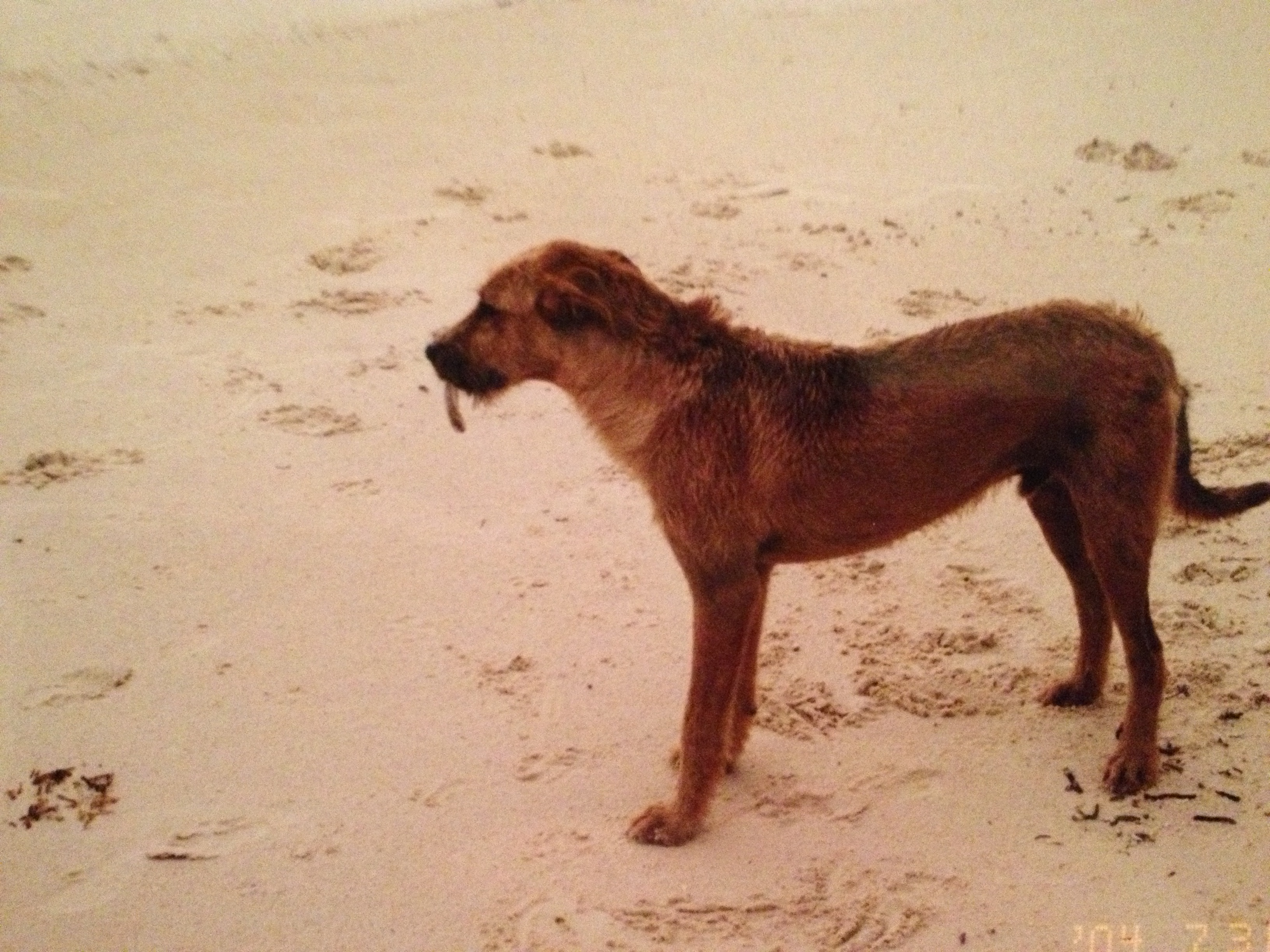
Xuma beacherOn the second day of our vacation, I noticed one particular stray dog hanging around our hotel beach. I said, “John, do you see that dog chewing on a coconut shell? He’s so thin, and look at all the bloody sores.”

John declared with a sigh, “I see. The poor pup.”

One night after dinner, we brought him some filet mignon. Careful not to scare him away, John and I approached the famished, feeble creature. He hesitated—we knew it would take time and patience to earn his trust. After a moment’s indecision, he meekly approached and delicately lifted the piece of meat from John’s hand.

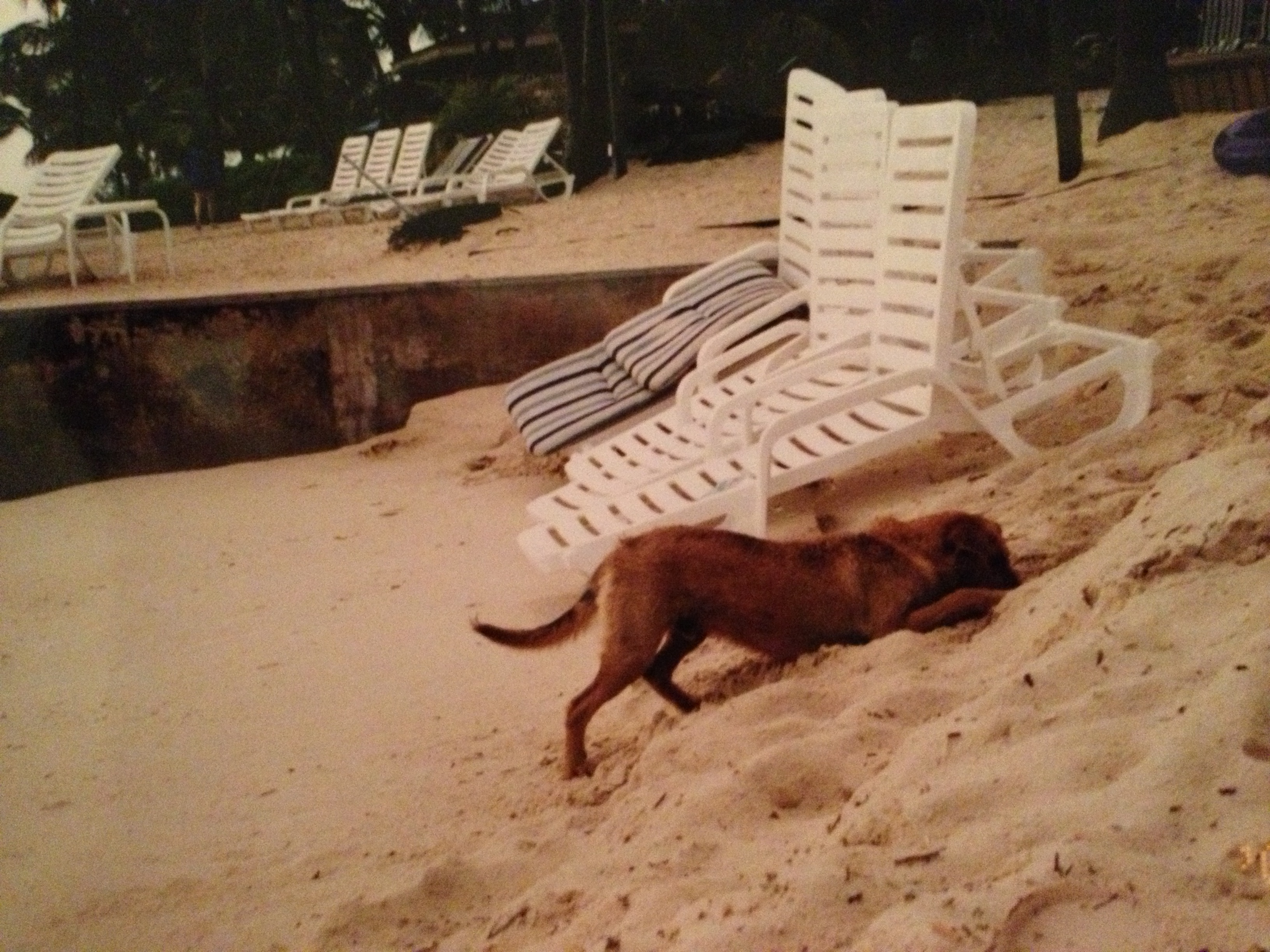
He’d retreat a few safe steps away from us, then devour the meat and return for more. After he’d eaten several bites, he began dashing off with the rest to bury it in the sand.

Xuma beach“Look, do you see what he’s doing?” John asked, obviously amused.

“He must be saving some for later.”

 We nicknamed our new friend Xuma. We decided that we had to do something to help our new friend. We found a brochure for an organization, Proud Paws, run by a British Veterinarian, Dr. Peter Bizzell out of the Palmdale Veterinary Clinic in downtown Nassau. We scheduled an appointment.  

Xuma lounge chairThe night before the appointment we planned to keep Xuma with us. We lured him with food until he got close enough to lasso with a rope we found dangling from a life preserver. Knowing pets were not allowed in the hotel we sat outside on patio chairs until all of the guests where settled in for the night. Once the coast was clear, we whisked Xuma into our arms and snuck him into our room. Xuma slept soundly. I am sure he knew we were there to take care of him and he appeared to trust us more with each passing minute.

When Dr. Bizzel met us in the examination room, he took one look at Xuma and exclaimed, “You got yourselves a Potcake!”

It turned out, “Potcake” is the Bahamian term for the thick, leftover food that remains in the bottom of a pot of peas and rice after several reheatings. Traditionally, Bahamians fed potcake to the indigenous dogs that freely populated the Bahamas. Hence the dogs have come to be known as Potcakes.

As he examined Xuma, Dr. Bizzel explained that some believe the original Potcakes came to the Bahamas with the Arawak Indians from Central or South America. Until very recently, all island dogs shared the same isolated gene pool.  “Potcakes are as close to nature’s perfect genotype dog as possible,” he said. “It’s an extremely unique species of canine.”

Some islands’ Potcakes look more like the typical “pariah dog” found in locales such as India and North Africa. They have smooth, short fur with little or no undercoat, cocked ears, a hound-like rib cage, and long terrier-shaped faces. More rare are the shaggy or rough-coat Potcakes but they do occur naturally. While the typical Potcake is brown, colors range from black, white, cream, yellow, and red. Adults stand about twenty-four inches high at the shoulder. Normal adult weight in the bush is about thirty-five pounds. Healthy, homed Potcakes can weigh anywhere from forty-five to fifty-five pounds. They have distinct characteristics of size and temperament. The Royal Bahamian Potcake is now a recognized breed in The Bahamas.

Dr. Bizzel vaccinated, dewormed, and treated Xuma for sarcoptic mange. We also had him neutered. Dr. Bizzel determined that he was around seven to nine months old.  He only weighed twenty-four pounds.

John asked, “What will become of him now?”

“You have two options,” Dr. Bizzel said. “Either release him back to the island or take him home with you.”

“Fly him back to the U.S.?” John asked, bewildered. It sounded like an impossible journey.

Dr. Bizzell responded with certainty, “Sure, no problem. I’ll have Jackie help you with the paperwork.”

Off we went with his assistant, Jackie, to the Bahamas Board of Health to complete the paperwork to take Xuma home. We had to purchase a crate. We thought we had a setback when we learned that Xuma couldn’t travel on the same airplane home with us. Our airline only flew turbo prop planes into the islands, and it would be too hot in the cargo area for a live animal. He’d have to fly on a different airline, so we bought him his own an airline ticket

When the day arrived for us to fly home we took Xuma to his check-in counter. Before placing him in the crate, I bent down next to him. I hadn’t realized how attached I’d gotten until I thought about how frightened he’d be alone in the belly of the plane. I felt tears on my cheeks and whispered in his ear, “You be a good boy, Xuma. I promise John and I will be there for you once you arrive in Philadelphia.”

Xuma was already visibly terrified by the airport, and so could offer no alleviation to our own anxiety. I put Xuma in the crate, closed the door, turned, and walked away.

“Just focus on the moment when we’ll be reunited,” John said. “We’re doing the right thing, Kristen.”

The flight arrived in Philadelphia right on time. We were elated to be reunited with our Xuma! We couldn’t wait to get him home to introduce him to our other dog, Buddy. In time, they would become the best of buddies.

XumaThe first month, he nearly doubled his weight, and his fur eventually grew back. Sometimes we still observe his survival instinct. Just like on that sandy beach when Xuma buried the steak, he will, on occasion bury a treat in our back yard. His prey drive still run deep in his veins; there’s rarely an opportunity for wild vermin to make it out of our yard alive. One of our favorite pastimes is to take the dogs hiking. Xuma with his inbred and intuitive nature will always lead us to the simplest and safest way up and down the mountain.

Only two weeks after we brought Xuma home Nassau was hit with an intense hurricane. We often wonder had we not brought Xuma home if we would have survived the storm.

IMG_2040 familyWe feel blessed to have found him. We know that fate brought us together that day will be forever grateful. We all live happily together, myself, John, Buddy, and our son, born after we brought Xuma home, Patrick.
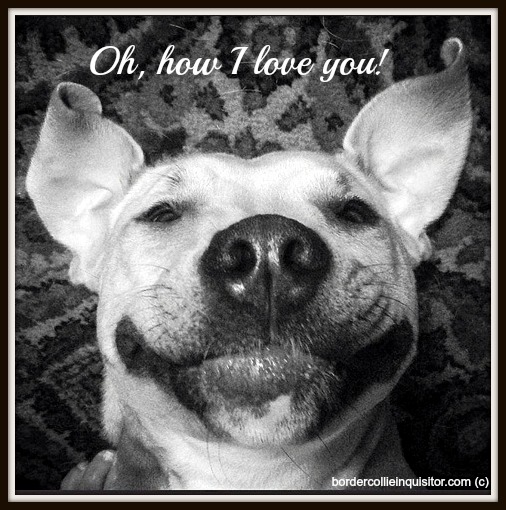
Potcakes are an excellent choice for people who want to share their lives with an intelligent, quick-witted, and bonded companion. They’re graceful runners, intuitive, empathetic, and the right match for someone who wants a long-term, interactive relationship with another intelligent species.

Finding Mick, Part 6

Try Me,

by Lisa Lanser-Rose

"He just wanted some rest."

“He just wanted some rest.”

After we dressed John in new pajamas, (“He just wanted some rest,” my mother had said), we sat on the patio, my mother on the swing, I in a chair across from her, each balancing a sourdough baguette, cheese, and tapenade sandwich on a plate. We ate like the damned, tearing the bread with our eyeteeth.

We had swallowed the last, thick bites when we heard the thump, jingle, and rattle of firemen rolling the stretcher down the front hall, and then, a duller sound, the firemen rolling the stretcher, more slowly, out.

You miss your dogs more than you do your husband.

“You miss your dogs more than you do your husband.”

For about a week after John’s death, I stayed to help with the kind of paperwork that requires other papers you don’t have. We got none of it done. I did what I could: I wrote the obituary. I opened an account online for John’s mourners to leave digital notes on a virtual grave. Mostly, I kept my mother company in person, my daughter company through Skype, and endured more time without the company of my dog. Being dogless is a hardship I don’t understand, but I suffered it from the time I was a toddler until I got my first dog at eleven years old. When I was married and my daughter and I flew to California without my husband, my mother used to tease me, “You miss your dogs more than you do your husband.”

Then came the day when my mother heard the thump, jingle, and rattle of me rolling my suitcase down her front hall. We heaved my suitcase into the trunk and headed for the airport shuttle depot. My mother gunned the engine to merge into traffic on Interstate Route 1. “Humans aren’t made to live alone,” she said. “I’ve never lived alone.”

“No way.” My mind flickered with views of every place I ever lived alone, from my graduate-school apartment to summers in every home I ever shared with Delaney—she’d abandon me for six weeks with her father. After she left, I’d spend a few days crying with Casey on the couch, then get up and love my life. I’d learned I could live alone anywhere, anytime. Try me.

The turn indicator clicked, and my mother piloted the car into a narrow gap in traffic. I gasped as the hood of her car eclipsed the license plate of the car in front of us. I put my foot on the imaginary brake on the passenger floorboard. “Mom. Slow down.”

Not made to live alone.

“I’ll be back next summer, me and my entourage.”

“I lived with my parents, then my roommates, then I married your father.”

“How about we slow down so we can see that car’s license plate?”

“When he left, I had you kids, then John. I’ve always lived with someone. My whole life.”

Until today. It dawned on me, when I left, she’d be alone for the first time in her life. “You have Ginger.”

“She’s John’s cat.”

I said, “If we survive this drive, I’ll be back next summer, me and my entourage.”

“Laura says I tailgate.”

“That whole multi-car pile-up thing? You’re how it happens.”

“Laura texts and drives.”

“You’re what? Seventy-one? The world is supposed to be tailgating you. Could you please just tap the brake, like three times?”

When I landed in Florida, Delaney and I had three days of her childhood left. I ferried her to Home Depot and Publix and Target and Borders and Bed, Bath and Beyond. We ate at all our places: Eddie and Sam’s New York Pizza and Sea-Sea

No room for Casey.

No room for Casey.

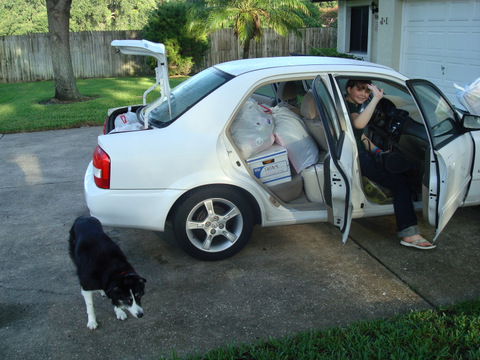
Rider’s and Tum Rub Thai and Gino’s. We went to Tampa Theatre and the Clearwater Cinema Café. We took Casey to the dog beach at Honeymoon Island. We found my heirloom steamer trunk and packed it with a desk lamp and a purple tool kit and a box of thumbtacks and Scotch tape and tampons, and lastly we tucked in a rolled-up Donnie Darko poster and the plush George the Curious Monkey doll that I bought for her when she was nine months old. When I heard there was a kitchen in the dorm, I hand-copied recipes for Delaney’s favorite ragout and vegan cupcakes and curry and Penne Franco. Delaney got mad at me when I fell asleep during our Kill Bill marathon. On campus move-in day, I took a picture of the loaded car with Delaney and Casey beside it. We were sad there was no room for Casey , but we were running late for the prescribed move-in hour, which made me anxious as we stood in line for the dorm key and then had to go to billing to clear up a mistake and then back in line for the key. When we finally got into the dorm room, Delaney’s roommate hadn’t yet arrived. I helped her rearrange the furniture and make her bed.

DSC02322I was just hanging her second Audrey Hepburn poster when she said, “Mom!”

“What?” When I saw her face had gone still, I froze.

“Thanks,” my daughter said.

She hugged me, and the strangest thing happened: my mom-life flashed before my eyes, or rather, it howled through me. Again she opened her eyes wide as the obstetrician clipped the umbilicus and convulsed as if she felt it. Delaney sat at her child-sized table and played with her Playmobil. Delaney swung her little fist at the dogs when they eyed her pizza. She waved good-bye when I left her at saxophone lessons, at horseback riding lessons, at math tutorials, at the airport gangway to board a plane to visit her father alone. Sunny Florida afternoons she sat with me on the lawn and debriefed me on her school day while I threw the Frisbee for Casey. Again Delaney and I laughed ourselves blue the time I pretended to aim  the car for a squirrel and horrified two mommies walking their children—I had to pull over down the block, out of sight—only the two of us knew why it was so funny. Again Delaney and I sniggered in the grocery store aisle because I was so impatient behind a slow old man that I mocked his gait outrageously enough to make John Cleese proud. Delaney and I bundled under a blanket in the dark to watch Ghost World. Delaney and I ate ice cream topped with chopped “Famous Anus” cookies and watched “Absolutely Fabulous” marathons. Again Delaney burst into my room in the middle of the night after a bad dream. Delaney strolled into my bedroom while I got dressed and said, “Wow, I’ve never met anyone so determined to look like a goober.” Again Delaney and I rode to school together every morning and home together every afternoon day after day, year after year, in city after city after city after city. Delaney and her girlfriends quipped downstairs in our living room while I crouched upstairs grateful that my home was filled with such rambunctiously sarcastic young women.

I loosened my grip and pulled away. Our curls tangled together, just for a moment, then slid free with soft, separate, bounces. “Okay,” I said. “That’s it, then?”

"Bye, Mom."

“Bye, Mom.”

Say It When You Feel It

curl your ears

Sadie, a pit bull rescue