Remember Yosemite
by Lisa Lanser-Rose
“It’ll be another day or so.” The hospice nurse clicked her pen. “He wanted to sleep through it. He’s sedated. Come with me.” She took us into the bedroom where John lay on his side, back to us. She showed us the medication and explained how to keep him asleep while he died. “Remember, he can hear you. Right up to the end.”
She left us standing beside John. We heard the front door open and close as she let herself out. John faced the window, away from us, sleeping heavily. I remembered him saying, I keep hoping, ‘This is it.’ Then I wake up, and I’m still here.
I said, “Is this it, then, John?”
“This is it,” my mother said.
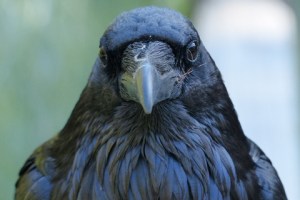
The birds still had fight in them.
We didn’t know what to do with ourselves. We went out on the patio. The ravens, whom my mother had named Edgar and Lenore, floated down and hopped along the fence. “They’re looking for sandwich crusts. I leave some out this time of day.” She went back inside the house, came out with an English muffin, and laid pieces of it on the rail. “They have one fledgling this year,” she said. I took some muffin and helped her. I could smell the pitch in the wood, feel the heat of it under my fingers. I had kicked off my shoes; the gravel in the garden hurt my feet.
Listlessly, we stood unprotected from the sun and searched the curled leaves of the oak for the youngster. The leaves looked dusty. The relentless summer sun had disintegrated everything, but the birds still had fight in them. Off to one side stood the bluebird box on its pole, with the bright red umbrella John mounted to give shade for the chicks. The two bluebird parents darted back and forth so fast that we had no will to watch them. We retreated into the shade and sat ourselves on the swing once more.
“It is what he wanted.” My mother turned up the hem of her shirt, found a small factory sticker there, and pulled it off. “He wrote emails to his doctor begging him for help with the pain.” Her fingernails were as smooth and perfect as the halves of tiny eggs. “He never could get ahead of it. He’d ask the hospice nurses to kill him. He wanted me to move him to Oregon where . . . He begged . . .”
The ravens croaked over the muffin bits. Their claws scraped the wood, and the stiff oak leaves clattered in the breeze. I said, “How awful for you, Mom.”
She sighed. “We need rain.”
A person who’s entered “active dying” lies inert. Perhaps it’s called “active” because activity surrounds the patient: self-conscious prattle directed at the dying person, pointless bustle, frequent checking for the passive signs of active dying, and horrid jokes, such as, “I wish the nurse had fitted him with a pop-up timer.”
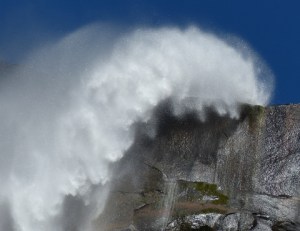
Time doesn’t hurtle as it does on Earth.
Everything about my own father’s death came back to me: mottled feet and hands, long pauses in respiration, slack mouth, a rattle in the throat. The suspense is brutal, the agitation intolerable, but on this way-station satellite, an hour, a day, has no meaning. Time doesn’t hurtle as it does on Earth. We became timeless women who pinched John’s toes like Hansel’s witch. Into the oven I’d throw banana bread, propelled by the notion that John had been waiting for it for twenty years. It couldn’t be too late.
“I have an electric mixer,” my mother said.
But I needed to mix it under my own effort. Beating the dough with a wooden spoon kept me upright. I had two recipes open on my laptop—one for banana bread, and one for active dying. We did not Skype Delaney. If we saw her seeing us, the spell might be broken.
As I slid four pans into the oven, my mother said, “What are we going to do with all that banana bread?”
“There’ll be lots of people.” We avoided each other’s eyes. My teeth hurt from clenching.
“It’s time for another dose.”
We did as Janice had instructed. The house filled with the aroma of banana bread. Delaney called on the phone, but we didn’t talk long.
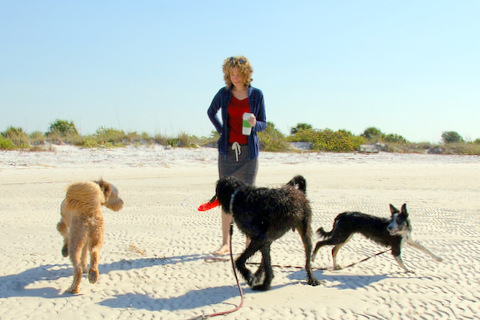
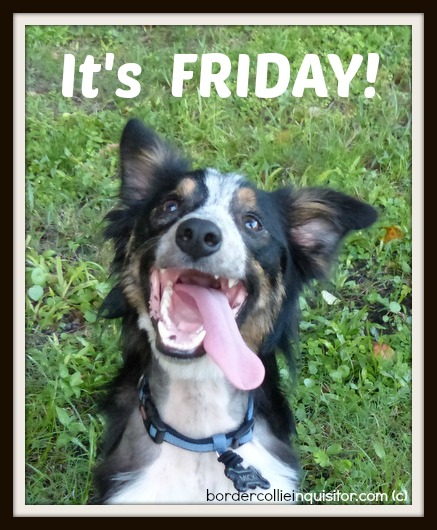
“I’m going to take Casey outside to play Frisbee,” Delaney said.

My former life–a place with an outside.
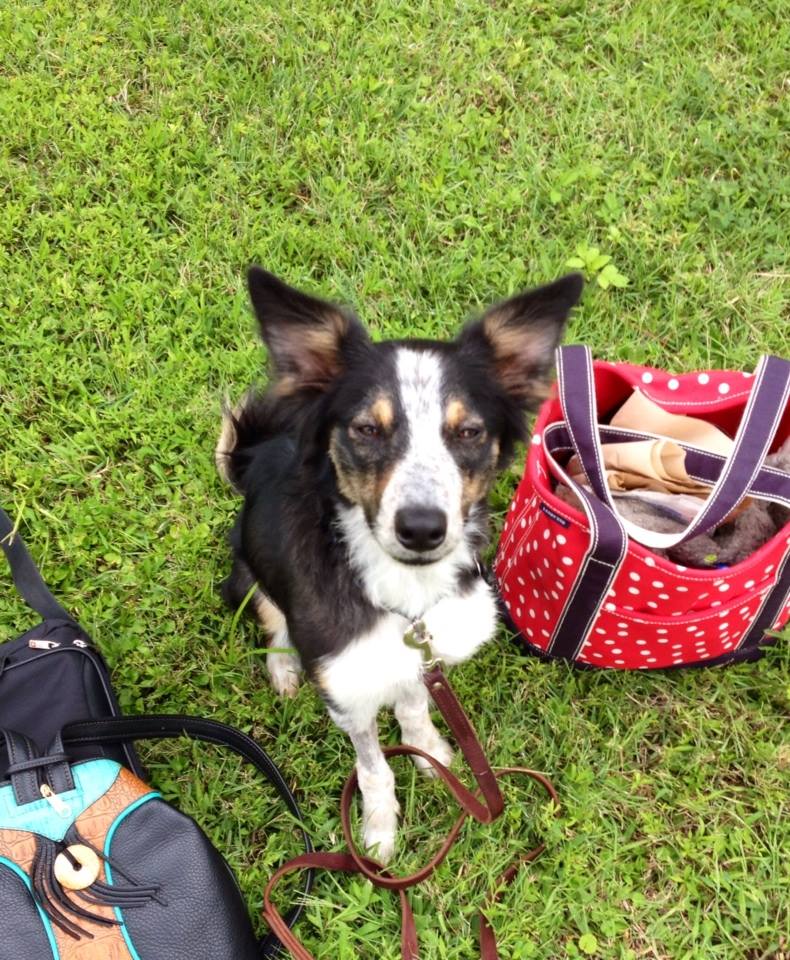
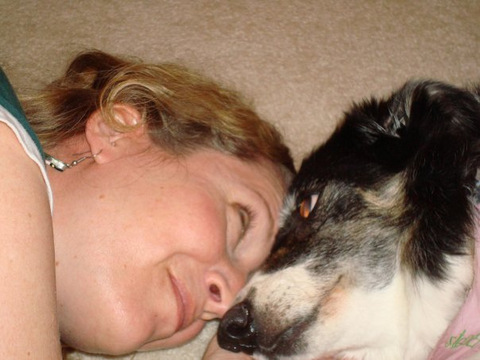
Funny to think that was my former life—a place with an outside, where Frisbees could be tossed to a Border Collie I loved. I no longer knew that yard, that young woman who was my daughter, that old dog. I understood, logically, that it was awful not to know them, but I didn’t feel it. I paced. I needed something to do.
“I wish I knew how to knit a shroud,” I said to Delaney, but, unlike my mother, she didn’t get the joke. After I hung up the phone, I went looking and found my mother sitting on the hospital bed next to John. ”

“It’s his favorite place on Earth.”
The bedroom was crowded with oversized solid cherry furniture: bureau, nightstands, sleigh bed, armoire, and beyond it all lay John, silhouetted high against the sunlight by the sliding glass door. The previous day, hospice had called six firemen to move John into a hospital bed to ease his breathing. They had positioned and raised the bed too much like an altar. Head elevated, he lay upon it on his side, just as Janice had arranged him, facing the sliding glass doors that opened onto the patio.
The sliding doors made a glass wall from which we could see almost everything John had placed in his garden. Beyond the dappled shade and flowers ran the wood fence upon which my mother and I had laid muffin bits for ravens. Along that fence John and my mother had trained six different kinds of table grape vines. The vines thrived and my mother fretted there was no one to help prune them. I said I’d do it before I left.

We could take figs, still warm from the sunshine.
At one corner of the yard John had set up their busy bluebird box and sheltered it with its cheerful umbrella, the one all passersby commented upon. To the right muscled the monstrous fig tree that we all climbed when the figs were ripe so that we could take them, still warm from the sunshine, and eat them with a tiny pat of bleu cheese. Beyond the fence ran a steep slope, a stream that pattered with frogs, a walking trail, and a nature preserve, in the canopy of which the two ravens raised their yearly brood.
When she heard me enter, my mother turned her head. “I was just reminiscing with John about Yosemite. It’s his favorite place on Earth.”
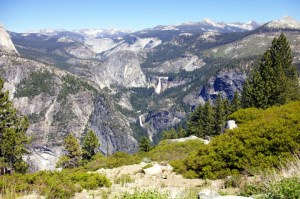
The unthinkable view.
I sat beside her. “Yeah?” It was important to keep talking to John, saying pleasant things. I couldn’t feed him banana bread, but I could keep the woman he loved talking about his favorite place. “So why does he love Yosemite so much?”
Together we staged a cheerful interview about Yosemite National Park: the soaring vault of Half Dome, the unthinkable view from Glacier Point, the summer snow, the sound and the scent of mist at the base of Bridalveil Falls, and the cry of coyotes echoing against the valley walls. Behind John, the breeze tousled dappled shadows and light over the glass. Everywhere the confetti of flowers flew. Bluebirds and goldfinches sailed, blue and yellow, to and fro.

This is it.
My mother said, “I think he’s on his new planet now.”
We waited. We stared. John’s side didn’t rise. It was so.
















 The Border Collie Inquisitor