Tag Archives: family

Image

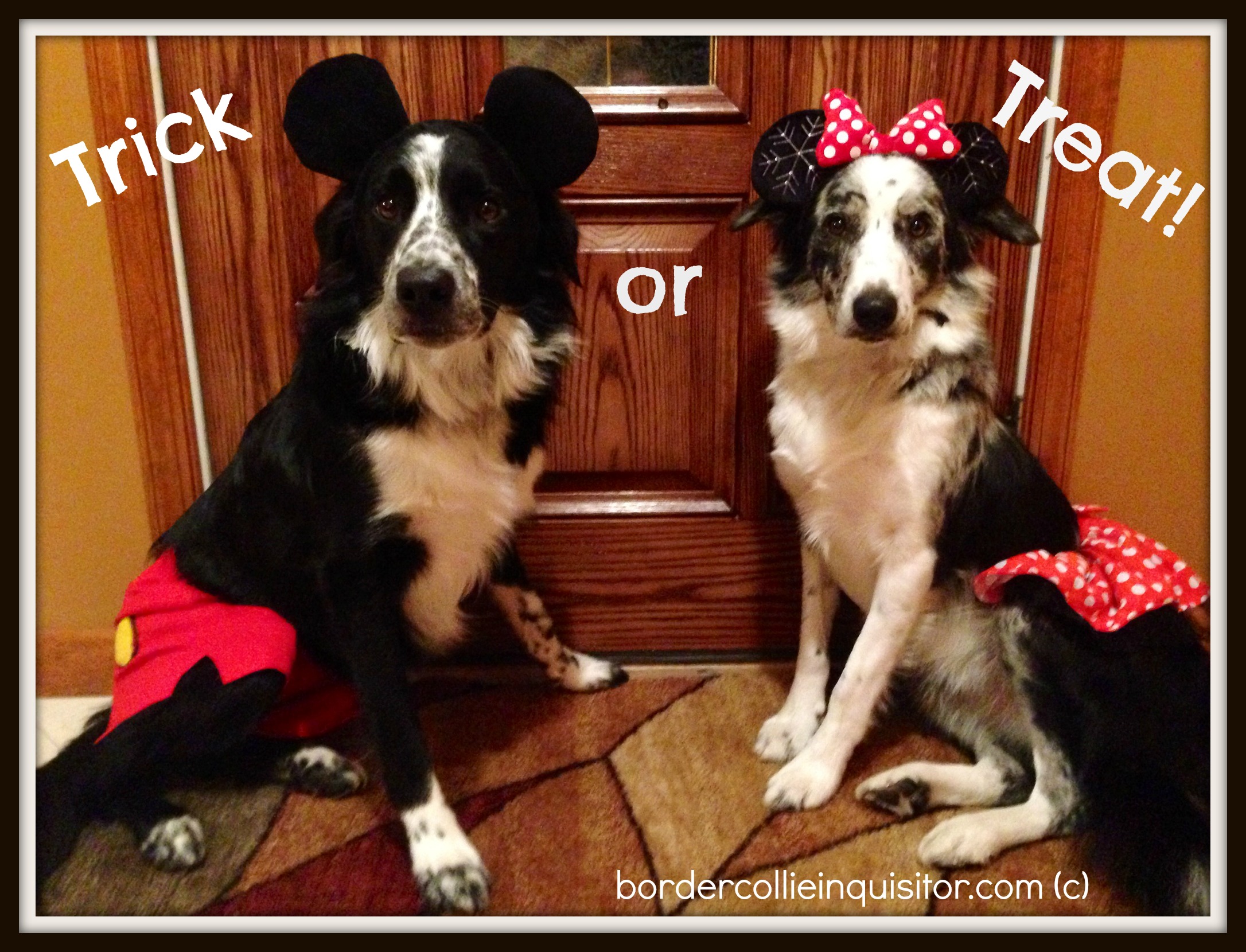
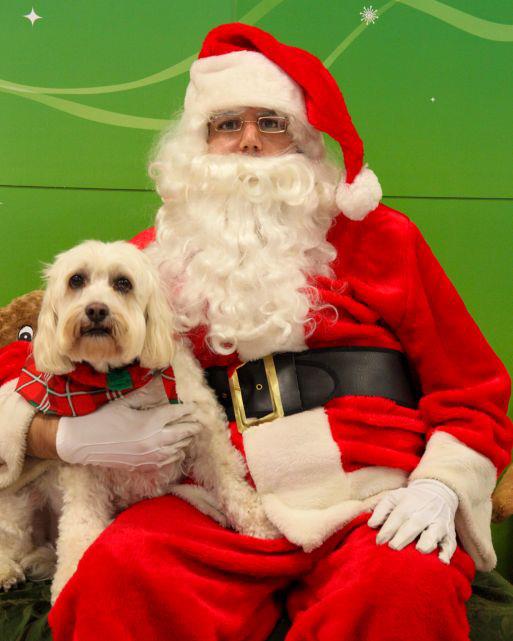
Happy Halloween from Ace and Brea!

AceBreaHalloween

Dusty, Part 4

Love Him Wisely

by Terri Florentino

“The truth is,” Susan said. She paused and ran her hand over her mouth. She took a breath. “Dusty can be so volatile that I’m afraid of him.”

Susan, Robert, and Dusty

Susan, Robert, and Dusty

I tensed. “Sometimes there are hard deci—”

“No. I’m in this for the long haul. We all are.”

“Okay. Good,” I relaxed. “I’m going to need you to love him wisely.”

“Can do,” Susan said.

We agreed to check back frequently, and a week or so later I visited them to follow up after their trip to the vet. I heard happy yelling and scrabbling behind the door as Susan put Dusty behind the baby gate. She let me in smiling and breathless.

“You were right,” she said. “The doctor agreed medication would ease his stress and lower his aggression. He’s been on it a few days now.”

I moved deliberately and calmly, never looking directly at him. Behind the gate he sat cute as a button and watched me intently. “Have you noticed any differences yet?”

“I’d say he’s showing a little less a play drive, which is sad, but the good news is, he is definitely less reactive.” She led me into the kitchen. “Juice? Tea?”

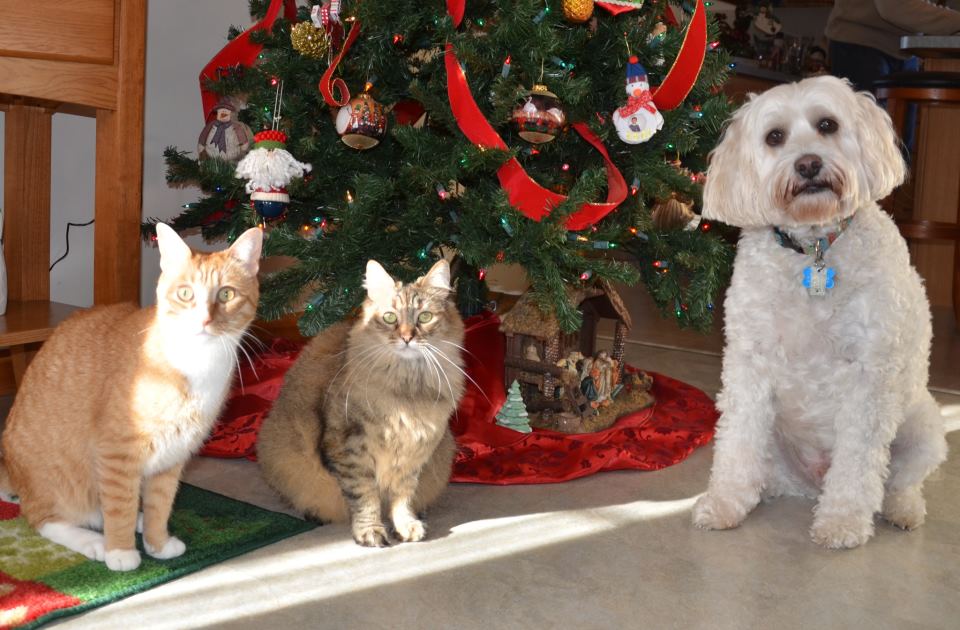
The fur family.

The fur family.

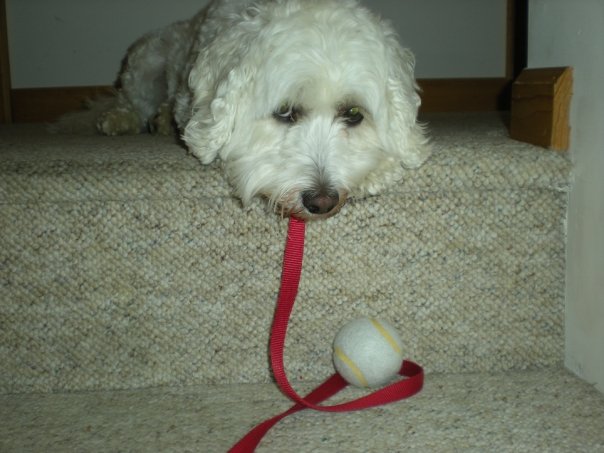
I could hear the hope in her voice, and I smiled. “Don’t relax yet. We’ve just begun. Keep a leash on him at all times, indoors and out, day and night.” This way he if started to act inappropriately they could get control of him quickly. “Think of the leash as an umbilical cord. If you want your dog to learn from you, he needs to be attached to you.”

Robert met us in the kitchen looking more at ease than the last time I saw him. We shook hands.

“I was just saying, be aware of Dusty’s body language and watch for early signs of reactivity.”

“I know exactly what you mean,” Susan said. She put a kettle on the stove. “His body stiffens, his head drops, his eyes stare, and he might let out a low growl you can barely hear.”

“The second you see him enter that mode, change the subject.”

“Should I offer to take him for a walk or to get the ball?” Robert asked.

“Yes, and I’ll teach you to learn some constructive learning games in class,” I said and grinned. “You’ll have a whole repertoire of new subjects.”

Susan was setting three teacups and saucers on the counter. She turned and flashed me a big smile at the thought of Dusty having lots of fun things to do besides snap and growl.

It’s important to be pro-active rather than re-active. “Let’s not set him up to fail. For instance, he’s not sleeping in your bed anymore.” I took a seat at the kitchen table, and Robert joined me. “Since that last episode with you and the bed, Dusty has lost the privilege of sharing that space. Do you see what I mean?”

Susan set a box of herbal teas on the counter and turned around with a frown. “Where should he sleep?”

“In a crate, where you know exactly where he is and what he’s doing.”

“That won’t be a problem,” Robert said, relieved.

Susan set a plate of sugar cookies on the table and joined us. We discussed Dusty’s fear of people he didn’t know. “Don’t force the issue this early on. Once you and Dusty attend my classes we’ll work on promoting positive interaction.” The kettle whistled, and Susan got up. “In the meantime allow him to be social with people he’s relaxed with, but take him immediately out of any situation that makes him uncomfortable. Baby steps, okay?”

I explained the nothing-for-free concept. “Dusty needs to earn everything,” I said, as Susan filled my teacup. “Everything. Toys, food, treats, free time, and affection must be earned.”

Susan and Robert looked at each other, dipping their teabags. “This is going to be hard,” Robert said.

“It’s doable,” Susan said.

“It’s worth it,” I said. We raised our teacups. “To Dusty.”

It took years. They trained Dusty in basic obedience, rally, tricks, Beyond Backyard, and even Canine Good Citizen.

“One of the secrets,” Susan said in an email, was that “Dusty loved the hotdogs we used for training. It helped keep him focused on me. Each night the family and I also enjoyed practicing all of the skills we learned with Dusty, and it tired him out.”

Tigger, Autumn, and Dusty

Tigger, Autumn, and Dusty

Surprisingly Dusty was tolerant of other dogs. He didn’t want to wrestle and play with them, but he was comfortable in their presence. Susan and Robert eventually got two cats. “I never thought Dusty would get along with the cats, but I believe they helped with his social development. He and Tigger are good friends. Autumn tolerates him. It’s so funny seeing our tough guy get smacked around by a cat and tolerate it.”

“Dusty and I formed a strong bond during the training process. I had a blast training him, and he loved to learn. I was amazed at the transformation in Dusty once I stopped the punishment and intimidation technique I’d learned on television. I focused on his good qualities. Seeing the twinkle in his eye and overall happier demeanor motivated me to keep going. After I while, I wasn’t afraid of him anymore. I was more and more determined to save him. We were able to wean him off of the Prozac after only a year. It got easier and easier to love him. We became the best buddies I dreamed we would be.”

Dusty and the Kids

Dusty and the Kids

Susan and Robert did a remarkable job with Dusty. I had cautioned them that Dusty’s baseline personality would never completely change, so the behavior management techniques have to be lifelong habits, and they followed through. I’ve seen it too often: the biggest mistake that my clients make is falling back into their old habits with their dogs. When they fall back, the dog falls back, and the trouble’s back.

“I’m not afraid of him anymore,” Susan said. “But I’ll always be guarded in certain situations. He still gets annoyed. It’s clear he can never be trusted, just as Terri predicted. He still wants to be the boss, but we try to keep a nothing-for-free attitude with him. I recognize his triggers and immediately change the subject. He’s much easier to re-direct now, and he’ll forgive and forget quickly. He rarely sleeps with us, and when he does he’s on a leash, and Rob gets in bed first, then he is invited up. My mission is to make sure he stays on the right path.”

Dusty and his favorite person, Susan

Dusty and his favorite person, Susan

Some things haven’t changed. Susan is still his favorite person, and he’s protective of their daughter Sarah. He still keeps an eye on Robert. He’s an intelligent dog, so he was easy to train. He demands attention but he’s learned to ask for it playfully. He loves riding in the car, going to the beach or park, and seeing other dogs. “The best part,” Susan said, “besides being able to keep and develop a satisfying relationship with Dusty, was meeting the people along the way, who helped us.  Especially Terri, but we met others who truly cared about our plight, and understood the potential heartbreak and stress of what it was like to have to deal with him.”

Susan got choked up remembering the tough times. “So many of our friends and family said we should euthanize him.” She shook her head. “I never knew the depth of the relationships between man and dog, and how much a dog understands and feels. I learned about dog rescue, and saw people give of their time, money and emotions to protect the helpless lives of so many dogs.   How inspiring is that? I appreciate dogs more than ever, and even though Dusty will never be a therapy dog, I am inspired. I hope to have a Therapy Dog one day.  I never would have been exposed to that if it wasn’t for Dusty. This experience has been invaluable to me in many ways.”

“Now I realize the truth in Anatole France’s quote, Until one has loved an animal, a part of one’s soul remains unawakened.

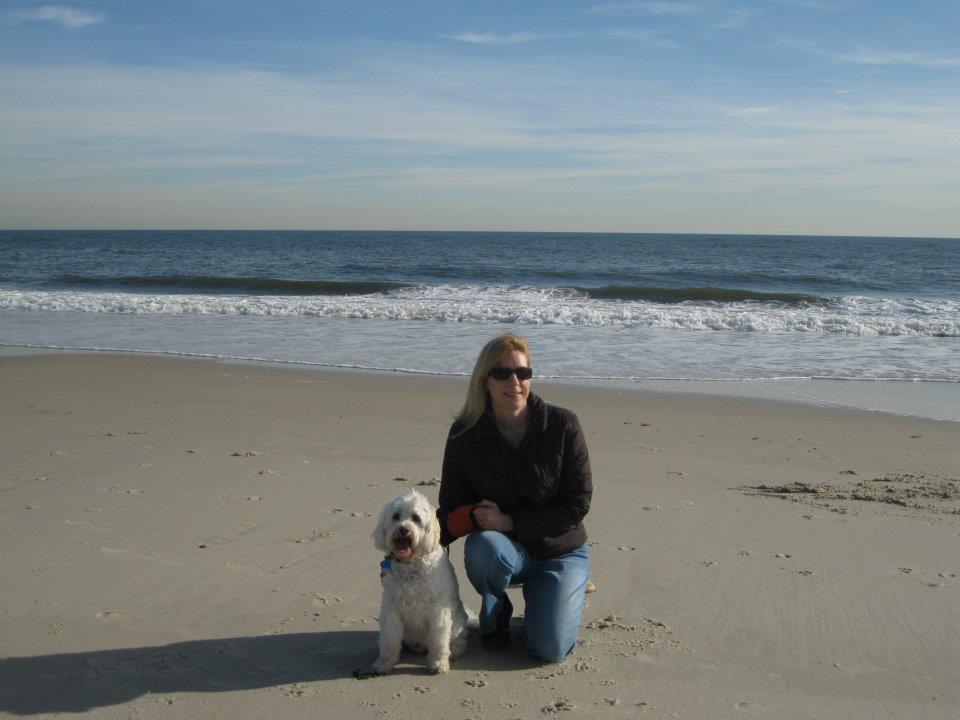
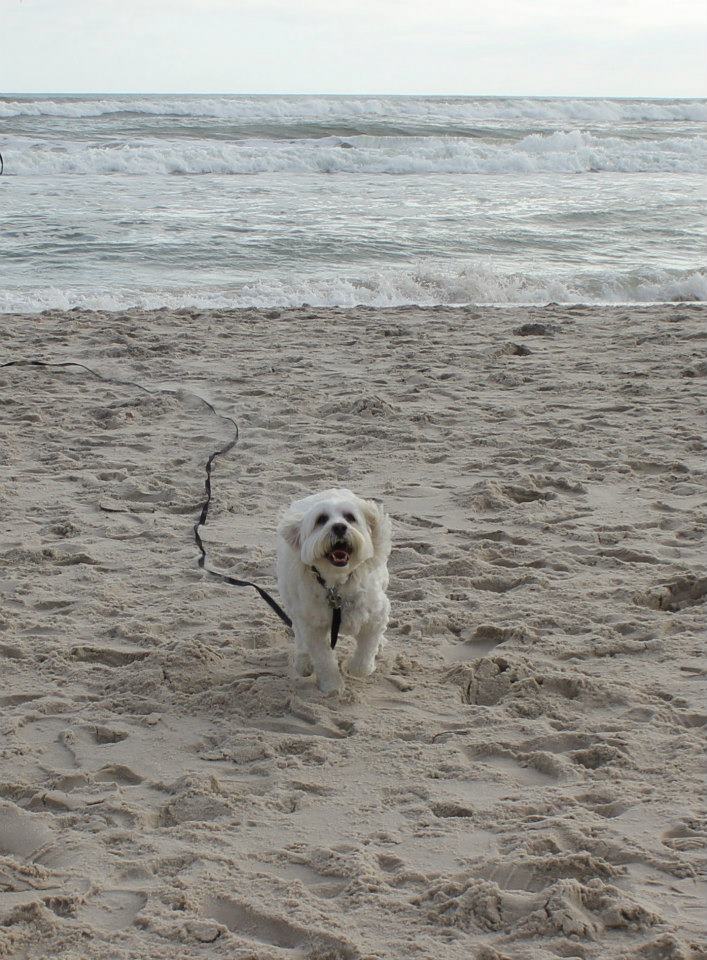
Beach Dusty

Mysterious Mick

IMG_0187

Mick wasting away in the hospital. Again.

September 28th, which was the second time Mick nearly died, I nearly let him go.

Three days off the IV later, he was bounding around the house. That had me spooked. More and more specialists were working on his case, but we still had no idea what was trying to kill Mick. I was overjoyed he’d escaped death again, even if my knees were still knocking.

Then, as soon as he was strong enough, I took him two-and-a-half hours north to the University of Gainesville veterinary hospital, where Dr. Specht told me to turn around and drive back home. Mick’s illness was too mind-boggling. Dr. Specht needed days to go over all his files and test results. That was a Wednesday. Dr. Specht was supposed to call me Friday with a hypothesis and a plan. He called—but only to ask for still more time. “As long as he’s doing okay, I’d like to take the weekend to keep investigating.” Mick wasn’t just doing okay, he was thriving like never before. I said okay.

Just four days after he was released from the hospital. I was astonished.

Just four days after he was released from the hospital. I was astonished.

Monday Dr. Specht called and talked for an hour. He said Mick was complicated, and probably more than one disease was at work on him. The primary suspect was cobalamin (B-12) deficiency, but he might also have Trapped Neutrophil Syndrome and Pancreatic Lipase Immunoreactivity. If not those, then Coombs’ Disease, homocystemia, pyruvate kinase deficiency, lymphangiectasia, inflammatory bowel disease, a motility disorder, or a malabsorptive disorder. “It’s also not impossible that bone marrow cancer might be crawling around in there, so we can do a biopsy.”

“You lost me at lymphangiectasia,” I said. “I’m not sure we have this kind of staying power.”

“Let’s start conservatively,” he said. We ordered a few basic tests through our local vet and arranged for the results to go to UF. We waited.

Mick's starting to get the hang of his skateboard!

Mick’s starting to get the hang of his skateboard!

The results are in, but we’re still waiting for Dr. Specht’s analysis and recommendations. Mick’s cobalamin was low, which is good news—one kind of B 12 deficiency explains many of Mick’s mysteriously menacing ailments, and it’s easy to treat. But what’s causing the deficiency? Does he have other disorders? How low do we let his B 12 go?

Meanwhile, there’s nothing deficient about Mick. For the first time in his life, he’s a full-blown Border Collie. He’s rocketing around the house, yapping at the door, barreling after the cat, trying to boss us around. Most astonishing: he cleans his bowl, morning and night. He’s grown so fast so suddenly, he’s almost caught up to his brother Sweep, something I gave up hoping for.

Food made us both so sad. It broke my heart I couldn't feed my puppy.

Food made us both so sad. It broke my heart I couldn’t feed my puppy.

It used to be he’d eat a whole bowl, then half, then none, and lie down despondent. We used to pace the aisles at Dog Lover’s searching for a dwindling numbers of foods he hadn’t yet tried. Right before his last near-death crisis, we realized we’d run out, and what was the point anyway? By then I knew, it wasn’t the food, it wasn’t his care, it was his body, and I thought no one could help us.

Something I thought I'd never see!

Something I thought I’d never see!

But now, Mick eats and heartily. He jumps and barks and roos while I open the can of Hill’s prescription i/d. I even saw the dog who refused all kibble steal a piece from the cat.

One day a week or so ago I thought he might have eaten an ibuprofen he found in the bottom of my daughter’s closet. I hardly had the energy to race him back to the vet, yet again, but I did. All he needed on top of everything else was a little poisoning and kidney failure. The assistant told me no ibuprofen was found in his stomach, but he really surprised her. “Mick is a new dog! He’s clattering around his cage and barking for attention—especially when we pay attention to another dog. And you won’t believe it. Dogs hate activated charcoal so we usually have to force it, but he ate it!”

Mick was a new dog. He'd try to drag Alby out of his home office to play.

Mick is a new dog. Here he’s (successfully) pestering Alby to leave the home office to play.

Mick was a new dog. Was he going to be as sweet? Was he going to be as eager to please? Was he still going to be the charming darling that everybody loves? Also, Mick has been “cool” in the old-school, Sean Connery as 007 sort of way, always fearless, always amused, always a twinkle in the eye for the ladies. Nothing rattled him. Would he still be my delightful go-anywhere, do-anything, gal-winning pal?

We lived in the now.

We lived in the now.

I’d grown afraid to train him or take him anywhere. “I don’t want him to catch any germs,” I said. “I don’t want to wear him out.” But he had more energy than ever. The truth was I was afraid to risk loving him again. I avoided training and socializing, anything that suggested Mick had a future that could be taken from us. If I invested any more in him, it would just hurt all the more if I lost him.

Gradually I restarted our training. “He’s ready,” I said, but really I was starting to feel safe. We dusted off his old tricks, revisited our basic manners, and finally tackled our skateboard lessons again. By the time Intro to Agility started Mick was in orbit.

Mick watches his classmates during his first Intro to Agility class.

Mick watches his classmates during his first Intro to Agility class.

But the first round of blood test results have been in for a week. I’ve called and left messages. Today the front desk said Dr. Specht emailed me, but we’ve exchanged emails before. I haven’t gotten an email. They said he’d try again by 5:00 today, but still no email, and here comes the weekend.

I think it’s okay, though. Mick is doing great. He’s ready for his walk now, and it’s a beautiful evening in Florida. Have a great weekend, everyone! Mick says, “Roo!”

"Paws up!" Time for a walk!

“Paws up!” Time for a walk!

Dusty, Part 3

Nature, Nurture, and Dusty

by Terri Florentino

“What exactly do you mean by, ‘pack mentality?’” I asked Susan.

Unhappy Dusty

“I’m not sure Dusty knows what fun is.”

Behind the baby gate, Dusty blinked at the three of us sitting around the dining room table, blowing our noses and deciding his fate.

“A take-charge attitude. I was the ‘Alpha,’ not Dusty.” Susan said she followed what she’d learned from the dog-training television show. “When Dusty would resource-guard something I’d try to intimidate him into releasing it. I’d get very close to him, use a sharp guttural tone and order him to, ‘Leave it!’”

“What happened?”

“Well,” she said with a rueful laugh, “that never worked, so I did like the expert said and picked him up and angled his head towards the floor. A few times this did work.  He’d drop it.” Before long, however, he began to threaten her with an uncompromising growl.

“He bit me,” Robert said. “Again and again. I’d only yank something away from him if I thought he had a hold of something dangerous. He broke my skin every time!”

Dusty had never been a social butterfly with strangers. His normal response was to walk away. As Dusty neared a year old, when people reached to pet him, he showed his teeth, growled and lunged.

"Sarah adores him."

“Sarah adores him.”

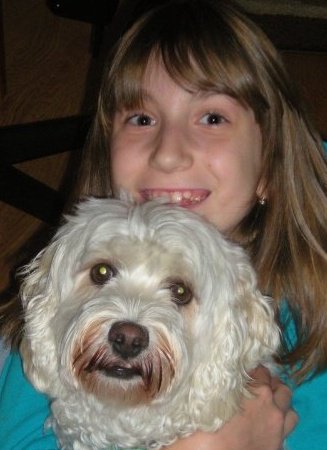
“Even though he’s gotten to be such an unpleasant, and even dangerous little character, I love him.” Susan paused to collect herself, and I thought she might need another tissue. “Our daughter Sarah adores him. He’s never gone after me or the kids.”

“He’d be gone,” Robert said. “In a heartbeat.”

Susan squeezed his hand. “Look, Dusty was supposed to be our pet. The family pet. It’s not fair for Rob to live in fear in his own home, terrorized by a fluff ball.”

We all glanced at the fluff ball. He hadn’t moved. I started to wonder if he wasn’t a stuffed toy. He sure was cute.

“Now that he’s trying to bite other people, we’re at our wit’s end. We just can’t live like this. We can’t live with a dangerous dog.” She had steeled herself. She wasn’t going to cry.

Not knowing where to turn, Susan emailed Dusty’s breeder with her concerns about his behavior. To her surprise, the breeder replied that she and her family must have harmed him and ruined him. She refused to take him back, under any circumstances. “If you can’t handle him, you’ll have to euthanize him.”

“Euthanasia was not an option. I could not kill my daughter’s dog.” Susan reached for the tissues. “I started to believe the breeder was right. I must have ruined Dusty.” Even though she’d been following all the techniques of the well known television trainer, she suspected she’d only made things worse.

“Once the vet did a physical and blood work on Dusty, and everything came back normal, she told us to call you. She said your experience and motivational approach would be our best option.”

“Let’s get started,” I said. I sighed and thought for a moment. Some things were hard to say. “The first thing I want you to understand is that a certain percentage of personality traits are inherited and indelible.” I turned to Susan. “Based on your description of Dusty’s behavior right from the start, I’m certain that some of what you are seeing is his genetic baseline personality.”

“So he was born this way? And he’s always going to be like this?” Susan teared up. “I’m sorry. This is just so sad.”

“No, no! Don’t apologize. Your heart is breaking. I get it. I’ve been there. And I’m not saying things can’t get better for Dusty. This goes back to the nature-versus-nurture debate. Nobody’s entirely sure how much of each influences personality. All we know for sure is that a certain percentage of both are factored into the final product.”

Susan balled the tissue in her fist and looked at her hands. “I should’ve done things differently. It never felt right. I ruined Dusty.”

“No. It is both nature and nurture, but you still can’t blame yourself. Look, a dog with Dusty’s issues has to be handled very carefully, and you couldn’t have known that. You did your best. You’re still doing your best, and that’s awesome.”

Susan and Robert nodded. They smiled.

"We need to lower his anxiety."

“We need to lower his anxiety.”

“Before we can teach him new skills, we need to lower his anxiety.” I recommended that they talk to their veterinarian about anxiety medication.

“You’re kidding me,” Susan said.

“That’s interesting,” Robert said. “I’d heard about it. People do it all the time. I just hadn’t thought of Dusty as anxious.”

“He’s afraid,” I said. “He was afraid before you met him.” I also explained what I refer to as, “the nothing for free concept.” This theory is based on controlling all resources. “Anything of value to your dog must be earned.” Into his daily routine we would integrate positive, reward-based motivational techniques. “All of this has to be fun, okay? Fun for you, fun for Dusty.” I turned toward the pup behind the gate and in my best, “Oh, boy!” voice I said,  “Right, Dusty?”

He slid to the floor and dropped his head on his paws with a grunt.

“Fun?” Robert said. “I’m not sure Dusty knows what fun is.”

I’d love that. I want him to enjoy his little life,” Susan said.

“Okay. We make him feel safe. We set him up for success,” I said. “Deal?”

We had a deal.

Image

Home-Office Essentials

IMG_3267

Image

You Know You Have a Healthy Border Collie When:

IMGP9670

Dusty, Part 2

Dust Comes Home

by Terri Florentino

Winter Dusty'

“There was nothing normal about him.”

As Susan and Sarah followed the young lady into the house, Susan said, “I’d like to meet our puppy’s parents.”

“I’m sorry,” she said over her shoulder. “We don’t allow anyone to go to the area where the dogs are housed. You might bring germs in on your feet, and the dogs could get sick.” She looked back again, wrinkling her nose at Susan.

“Oh. Of course.” Susan had been hoping for a glimpse of how her pup would act and how he might look as an adult.

“You wait here,” the girl ordered. Then she turned to Sarah, grinned, and said with false gaiety, “I’ll be right back with your new puppy!”

As the young lady disappeared behind a door, Susan and Sarah beamed at each other. When the door opened again, they were breathless at the sight of the adorable ball of curly fur in her arms. Susan reached for the puppy. She hesitated. The puppy looked tense and pulled away from her. “Why does the puppy seem fearful? His tail’s not wagging.” Susan didn’t know how to feel or what to do. She had sent a non-refundable deposit and invested a five-hour drive for this puppy; turning back was not an option.

Nothing made him happy

“Nothing we did made him happy.”

“He’s just nervous, nothing to worry about, he’ll settle down.” The young lady kissed him on the head. He didn’t seem to mind that.

Gingerly, Susan took the rigid puppy and cradled him in her arms. Mechanically, the girl went over the contents of a basket of puppy food and other new-puppy essentials. By the time she was done, the puppy had relaxed. He even gave Susan a little kiss on her cheek. The affection offered her some relief. The fact that he was as cute as a button didn’t hurt either.

“Well, if you don’t have any more questions,” the girl said, in a way that invited no further questions, I’ll see you to your car.”

Susan hesitated; she felt full of questions, but couldn’t think of any in the face of such a brusque remark. “Well, we do have a long drive ahead.”

“Can I hold him? Can I hold him in the car?” Sarah said. “I can’t wait to show him his bed and his bowls and his toys!”

Out at the car, the pup went stiff with fear again as Susan opened the back door. She placed him in his new crate in the back seat, said goodbye to the strangely aloof girl, and headed on their way.

On the way home Sarah and Susan discussed what name they liked best for their puppy.  The pup was mostly white, with a small stripe of very light tan down his back, and some tan fur on his ears that looked like dust. Susan suggested calling him “Dusty.” Once the entire family arrived home later that evening they all sat around and discussed various names. Everyone liked “Dusty.”

Really sad Dusty

“He seemed depressed.”

“The first two weeks weren’t what we had expected,” Robert said.

“What exactly do you mean?” I asked.

“When they brought Dusty home, he seemed depressed,” he said. “Normally a puppy would run and play, but Dusty just lay around. I wondered if he was sick. I got down on the floor to wrestle with him, and all he did was sit and stare at me.”

“We were worried. I called the breeder,” Susan said. “She said Dusty just needed more time to adjust. Something didn’t seem right, so I took him to the vet, but she just assured me we had a healthy-looking puppy and that we needed to come back in a few weeks for some vaccines.”

Inevitably Dusty settled into some of what anyone would constitute as normal puppy behavior. He chewed on whatever met his mouth, got the usual puppy “zoomies—racing around and like he’d gone completely haywire, and started the puppyhood biting, or “mouthing.” The mouthing was so severe, they called him, “land shark.” Dusty grabbed and nibbled on hands, legs, pants, and feet. It was difficult to walk him; he got furious tethered to a leash and made every effort to chew through it to free himself.

"I wondered if he was resource-guarding me."

“I wondered if he was resource-guarding me.”

By the time Dusty was six months old he started to exhibit “resource-guarding behavior;” when he had food or a chewy, he growled and snapped dangerously at anyone who came near him.

“I was taking Dusty for a ride in the car,” Robert said. “He grabbed a tissue from the console between the seats, and I didn’t want him to swallow it. I reached to get it out of his mouth, and he grabbed my hand in his teeth—not just once, but again and again. He bit down as fast as he could, over and over, slicing me up. In the blink of an eye, there was blood everywhere!”

“I was devastated when Rob told me what Dusty did.” Susan got up and fetched a box of tissues. She dropped it on the dining room table and helped herself to one.

“Careful!” Robert joked. “Don’t let Dusty near it!”

“I didn’t dare admit it at the time,” Susan said, glancing at the button nose behind the baby gate. “But I simply could not enjoy my puppy.” She blew her nose. “How sad is that? He was never cuddly or affectionate. Nothing we did made him happy. There was nothing normal about him. He was bold, pushy, always had to have his way–or else! It was like he was terrorizing us. I had no idea what to do with such a mean and nasty puppy.” Susan began to cry again. “I couldn’t believe it. Who’s ever heard of such a thing?”

Robert squeezed her hand.

Susan pulled herself together. “It seemed like he was only putting up with me and the kids, but he outright hated Robert.” She laughed and sniffled. “I’m sorry, Honey.”

Robert smiled. “I know it’s true. I guess I didn’t smell right.”

“I understand how some dogs are intimidated by men who are authoritative and commanding,” she said. “But Robert is gentle and kind. He was sweet to him. He got down on the floor with him, talked in a high-pitched voice. He did everything right. He really tried. I thought maybe Dusty was resource-guarding the children and me from Robert.”

“When Dusty and I where home alone together, he was fine with me,” Robert said.

“That’s right,” Susan said. “When I was home, Dusty would never leave my side. When Robert came within a certain distance of me, Dusty growled until he backed away.

“Then he started trying to keep me out of certain rooms.”

“Okay, that’s interesting,” I said. “How did you each handle Dusty when he acted inappropriately?”

"He just seemed to tolerate the kids and me."

“It seemed like he was only putting up with me and the kids.”

“I’m embarrassed to say,” Susan said. “But there was this trainer I saw on television who emphasized the importance of being a pack leader. I followed his advice.”

“Okay, I see.” I looked at the angry little mop-head glaring at us from behind the baby gate. He had hardly moved a muscle the entire time. “I think we see where this is going, don’t we, Dusty?”

He didn’t even blink.

Image

What Mick’s Teaching Me

P1040270 (1)

The Doctor Calls

Yesterday afternoon while I was waiting by the phone, the doctor had already called. He’d called the cell number I’d left the day I was in Gainesville so he could reach me on the road. Yesterday I’d left him the house number–my cell gets no signal in this house. This kind of thing has happened before.

We were waiting all day!

We were waiting all day!

He left me a long message. The summary goes something like this:

“I need more time. If Mick is still strong, I’d like to take the weekend. There are more records I want to pull. I have a pretty good idea what we have here, but I’ll need about a half hour to explain. I’m thinking it’s not just one disease, but several. By Monday I’ll have a plan and an estimate of the costs, and we’ll have to decide together if you want to do it all at once or in stages. If Mick isn’t okay this weekend, call me right away. Otherwise, let’s talk Monday. Plan for a half hour.”

Mick Goes to Gainesville

by Lisa Lanser-Rose

Gainesville

Hoping for an answer and a cure

As many of you know, Wednesday I took Mick to the University of Florida’s veterinary hospital. When we arrived, I discovered that the doctor who’d been given the case the day before had turned it over to someone more experienced. “Sorry you drove all this way,” Mick’s new doctor said, “but I’m going to need a few days to absorb all this.”

Absorb? Absorb? I thought about autoimmune destruction of gastric parietal cells and stopped myself from making a bad joke.

We sat together for over an hour. He’d read for awhile, ask a few questions, and kneel down to examine Mick. “I hate to tell you this,” he finally said, “but, your dog is . . . really interesting.” He said Mick either has an extremely rare genetic disorder, perhaps something wholly new, or a rare form of something common. “Either way, this is one for the medical books.”

After he left the examining room, his student doctor stayed behind. “I have a Border Collie too. I love her to death.” She hugged Mick’s file to her chest. “I’m the one who’s going to do all the grunt work on this case.” Her eyes burned with intelligence and determination. “I’m going to discover this disease and cure Mick, I promise you. We’ll call it ‘Mick’s Syndrome.’ Or maybe it’ll be named after me.”

Gainseville sent us home

UF Sent Mick Home

I smiled and wondered if I was too old for veterinary school.

Then, they sent us home to give them time to do their Mick homework–ordering more records, compiling charts and graphs, conferring with other experts, and doing research.

Anyone would be terrified if a deadly mystery illness attacked their loved one, especially one so young and full of promise as Mick. I’m remembering my friends whose children suffered. I’m in mind of the movie, Lorenzo’s Oil. Is there a Nick Nolte for Mick? Is it easier because he’s “just a dog,” or in some ways does that make it harder? I do know it’s especially painful because Mick is perfect for me. He’s exactly what I searched for: a well tempered little character, outgoing, sweet, and biddable, exceptionally well suited to my sociable nature and adventurous ways. 

We're afraid we'll never be safe.

In the hospital.

Instead of simply taking over my life the way Border Collies do, Mick brought with him an occupying army of new words: eucobalaminemic, neutropenia, homocysteine, aciduria, hyperkalemia, cosyntropin, neoplasm, aldosterone, cardiac collapse, and immune-mediated hemolytic anemia.

One week I’m  wondering which is the best way to teach him not to jump up on people. The next I’m wondering if his neutrophils are trapped. Why is his cobalamin normal but his folate “in the basement?” What stole his ionized calcium? It was there July 2, gone July 17th! Were his white bloods cells pillaged before or after the septicemia? Nobody knows.

Alby loves his "brakkie."

Alby loves his sweet “brakkie.”

My husband and I were hunting for a house with a great yard for Mick. As the baffled doctors ordered increasingly obscure and expensive tests, we began to argue about when to “put on the brakes” and when to let Mick go. Mick’s illness waxes and wanes, and twice now it’s come on so strong it almost killed him. Both times we spent a staggering amount of money to save his life, but couldn’t put an end to the threat. We just had more mysteries and no answers. What’s the point of draining our savings if Mick is never going to enjoy his new yard anyway? The next attack could kill him.

A Super-Awesome Dog

Mick at school: a super-awesome dog

In his good times, Mick’s puppy school and basic obedience trainers told me, “He’s a super-awesome dog. You two are fun to watch. You have a powerful bond.”

I’d beam and say, “Mick makes me look good.” The only thing I can take credit for is I sure chose well. Except for the deadly illness thing.

When he’s sick, doctors, specialists, nurses, and technicians look at me gravely and say, “Not a lot of people would have done this for him.”

They say, “He’s a really lucky dog.”

They say, “You’re a good mom.”

I’m touched, I’m flattered, but I’m also wondering: am I crazy?

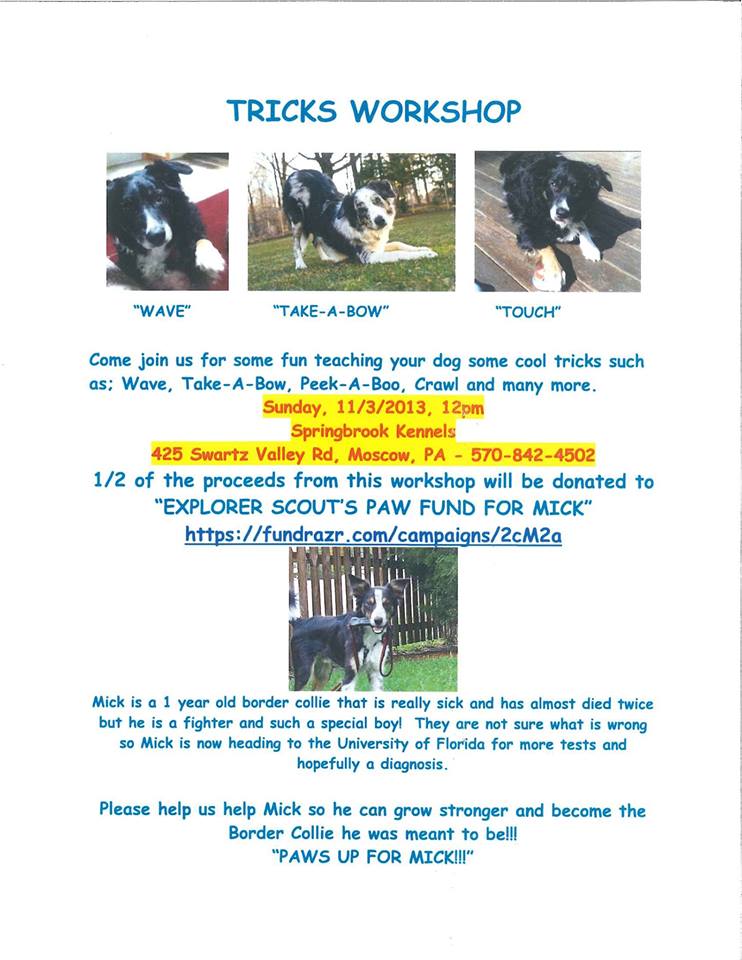
Pawfund raiserI don’t think so. I can’t think so. As Mick’s mystery persists and his medical bills mount, love and support have risen up around us and humbled me. On social and medical networking sites, Wendy Drake, Megan Biduck-Lashinski, and Terri Florentino have rallied to beat the clock, solve the mystery, and raise funds to save Mick’s life.

Thanks in part to their efforts, more and more doctors are examining Mick’s case. Doctors and their staff tell me they lie awake at night worrying about Mick. The young doctor at UF stayed up late reading his files with her pulse racing. “It was like a television show. I kept thinking, ‘Oh, no! Does he live? Does he live?'” That now depends in part on her. I told the doctors, you better do right by Mick–over a thousand people are watching you.

Everybody Loves Mick

Everybody Loves Mick

Mick isn’t just lucky to have me, he’s lucky to have us, a community of people who care passionately about what happens to him. If Mick has a special bond with me, he has a special bond with all of us. Are we all crazy?

If so, crazy makes for pretty great company.

You keep me going. And I have to keep going, not just for Mick but for any other dog and family who might be stricken with this disease. If the anguish and expense of this hit-or-miss, trial-and-error, roller coaster that we’ve been on can’t help Mick and others, what is it for? We must solve this for everyone. Consider this: how many other beloved dogs did this disease kill before anyone could identify it?

With such love around us, it’s impossible to give up hope. Mick’s ups and downs are exhilarating and harrowing. He’s medically fascinating. This would be really cool if it weren’t our Mick.

Taken today. "Throw. The. BALL!"

Taken today. “Throw. The. BALL!”

Mick is here. He’s not just an interesting medical case or a novelty pet with a cross on his forehead. He’s a sweet, talented, sociable young dog who’s yapping and wants me to throw his tennis ball NOW. A week ago I thought he was dead.  I’m exhausted and scared. How long will this round of good health last? Will the doctors solve the riddle in time?

For now, Mick is on an upswing. He’s had these before. Today Mick is having one healthy, boisterous hour after another. We’re going to go enjoy them while they last and hope the riddle is solved before next attack. I dread having to decide whether or not to let him, and his mystery, go.

Thanks to you, we’re far from that dreadful moment. His prospects are full of hope. You keep us going in every possible way. Thank you for caring, for keeping us company, and helping us save Mick.