
Mad About Bcs
By Linda Husson
My name is Linda Husson and I live in northeast Pennsylvania. My
passion is my dogs…training them, competing with them, playing with
them, loving them, and enjoying their companionship. Continue reading
By Linda Husson
My name is Linda Husson and I live in northeast Pennsylvania. My
passion is my dogs…training them, competing with them, playing with
them, loving them, and enjoying their companionship. Continue reading
Posted in Mad About BCs
Tagged agility, border collies, dog sports, dog training, family, friends, shelties.
A fellow rescuer emailed me about a nine-month-old female border collie. “She’s too much for the owner to handle,” Linda wrote. “If someone doesn’t take her she’ll be dropped off to a shelter in the morning.” Continue reading
Posted in The Pack
Tagged Behavior/Training, border collies, dogs, herding dogs, pack behavior, rescue dogs, sheepdogs
On a hot August day, I went back to Nala’s home. Nearly a month had passed since our first meeting. As Michele, Mike, and their son Bobby and I greeted one another, I noticed Nala pacing back and forth. I tried to get her to engage with me as she did the first time we met. She stopped the pacing and let me caress her gleaming smooth black side. Then, she turned and growled. I pulled away, and she continued pacing back and forth, back and forth.
“How’s she doing?” I asked. I missed the way she’d once gazed into my eyes. She now seemed unreachable.
“Big Dog’s got me real worried,” Mike said, and I smiled to hear him use Nala’s nickname.
“Mike was recently out of town,” Michelle said. “While he was gone Nala was so agitated and aggressive I could barely go near her. A few times I saw her wobble and collapse. I wanted so much to help her, but if I touch her, she growls and snaps.” Michele crossed her arms across her chest, hugging herself, her brow knit with worry. “I feel so helpless.” We four stood watching Nala endlessly pace, hypnotizing us with her rhythm, all of us sharing in that helplessness. “Our other dogs have been avoiding her as well,” she added. “Want to meet them?”
“Yes,” I said, eager to break the spell.
The terriers came out first. They were cute, friendly, small, and curious. They were littermates that had never been separated, and you could tell that they were everlastingly bonded. As they rushed me and then romped in the yard, they purposely avoided Nala. She ignored them as well. A moment later, the sheltie mix blasted out the door and after the terriers. Mac was medium-sized, active, affectionate to his family, and slightly wary of me. However, he seemed especially on guard with Nala, tail tucked, ears back, giving her lots of room. He knew something wasn’t right.
Mike clicked his tongue. “That’s the saddest thing right there,” he said. “Big Dog and Mac were always best buddies. See what I mean? This is definitely not normal.”
Bobby chimed in, “I can’t pet her or take her for a walk. I can barely touch her without the fear of being bitten.”
Mike talked about the most recent visit to a veterinarian in Pennsylvania. She had been previously examined by a veterinarian while living in Boston with his son Biff. “She tested positive for Lyme disease so we’re treating her for the Lyme disease and pain. Anxiety medicine was also prescribed to help her to settle down. The doctor suspects some sort of central nervous system disorder and suggested that we take her to a local neurologist. We’re taking her next week.” He sighed, his eyes following Nala as she paced back and forth and the other dogs gave her room. “We’ll do whatever it takes. We need to get to the bottom of this.”
“I hate to say this, but what I recommend is for all of you to keep Nala as quiet and comfortable as possible. If she’ll go into her crate and rest comfortably, use it as often as you can. Keep a very thin four-foot leash attached to her collar so if you need to take a hold of her you’ll be at less risk of being bitten. Be sure to call me anytime if you have any questions or if there is anything I can do for you and please keep me posted.”
 “Thanks,” Mike said, giving me a wan smile. “We’ll let you know how Big Dog’s coming along.”
The entire drive home I replayed all of the events from the last couple of months over and over again. I was trying to make sense of Nala’s bizarre behavior. I was mystified. My heart was heavy not only for Nala, but her family as well.
After seeing both a neurologist and an internist, Nala was taken to surgery in late August. The poor dog had been diagnosed with Lyme disease, hypothyroidism, and an abscess in her armpit that was no doubt causing her discomfort and pain. A surgical specialist removed the abscess, and she was sent home with a drain coming from her armpit, a bandage, and medication. Hypothyroidism can promote behavioral problems, I thought. Could the answer have been found? She would need time to heal. All we could do is wait, hope and pray.
Over the next month, Mike sent me email updates on Nala’s progress. She had two post-op appointments, and the specialists were pleased with her healing. Her behavior, however, was still as unpredictable as an uncharted river. Most worrisome, she was now consistently turning in circles to the left, so Mike scheduled an appointment to take her back to the neurologist.
On September 11th, a staff member at the animal hospital came into my office and handed me a fax. The report was from a veterinary neurologist; Mike had taken Nala to him that same morning. My eyes scanned the report. I was like a speed reader going from the pertinent history, quickly through the physical examination notes, skimming the diagnostics and finally on page 2, the diagnosis. I took a deep breath: Intracranial advanced brain lesion (thalamus), placing pressure on the cortical plates.
So, that was it. After all was said and done, Nala had a brain tumor. For a moment, I was paralyzed with grief for Nala and her family. I sat in silence, still holding the report. I no longer looked at it, but through it, where I could see big, sweet Nala gaze again into my eyes the powerful and pleading way she did that first time.
Then, I snapped out of it and read on. “The family decided to let her go . . .”
She’s no longer in pain, I thought, the report blurring through my tears. For that I am relieved.
I would like to offer my deepest sympathies to the Patrician family. I cannot thank them enough for allowing me to share their story.
Godspeed, Nala.
“An animal’s eyes have the power to speak a great language.”
Martin Buber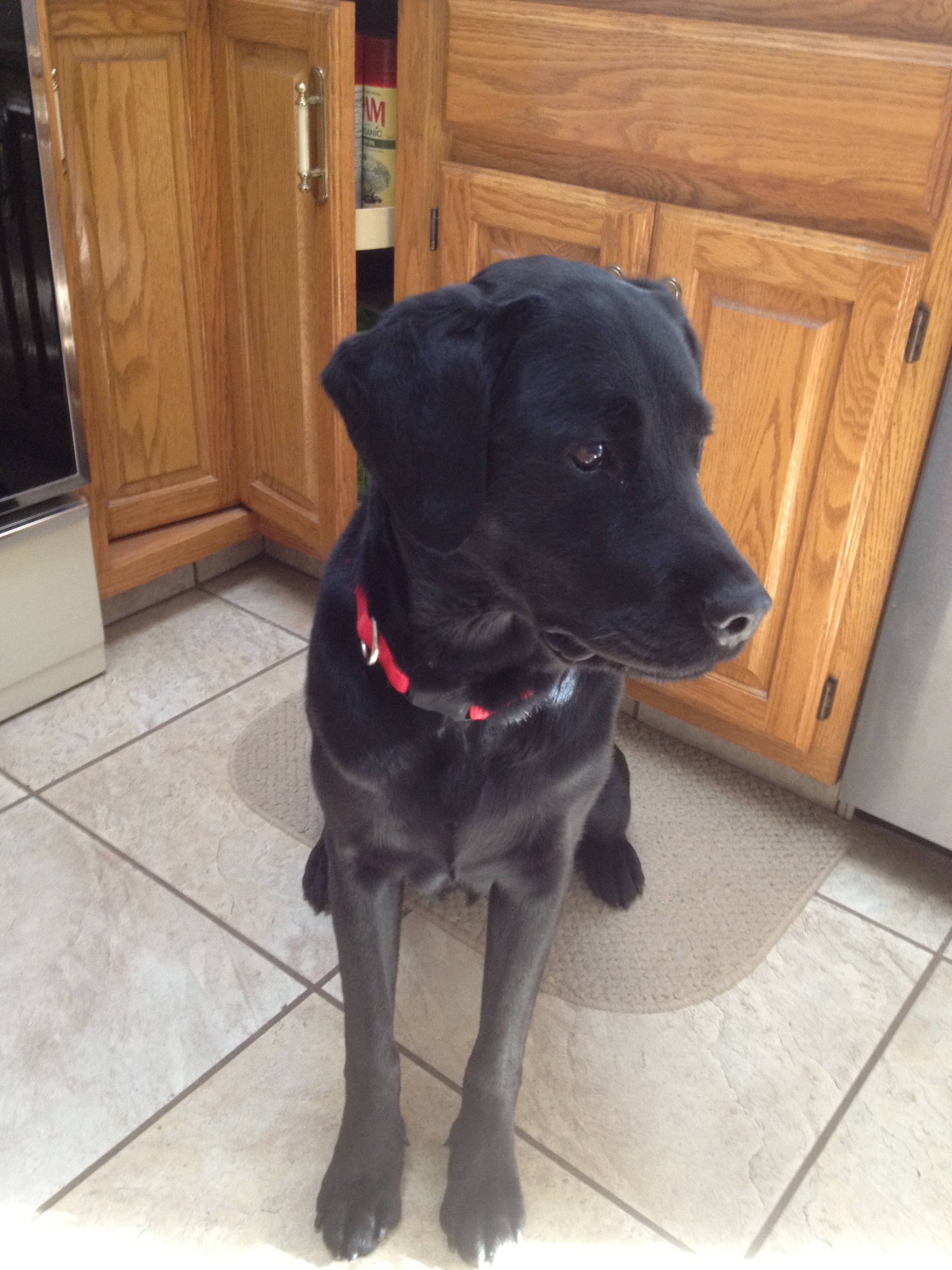
They walked side by side in front of us, with me and Melissa hanging in the background. Youth and a joy of being tougher will do that. The chatter and giggle were non-stop. We could not hear what they were saying, but sometimes I think they were having a good laugh on us.
They were a cute pair. Melissa’s girl was a bit older with wavy blond hair that tousled when she walked. My girl had long legs that glided across the ground. Each was wearing a vest which accentuated their youthful figure.
They were good window shoppers. Nothing got past them. They practically pushed their noses up against the window to get a better look at the displays inside. From that position, they scouted around the store for anyone they might know or for something they might want.
Today, we were at a big box department store. As we approached the store front, the doors magically opened, beckoning us in. This worried my girl. It took some convincing to get her to sneak past the mysterious swinging doors and into the store for some serious shopping.
This store knew how to entice the gals. The clothing department smacked us in the face as we entered. The girls hastened their pace to get to the racks of clothes as me and Melissa each snagged a shopping cart. There were so many clothes to see, to touch, to smell, to run through. Blue jeans and dresses were especially fun. Their rack heights let the bottom of these clothes just skim the floor. My girl especially loved weaving in and out of the jeans on the racks.
But, we had a shopping list and only 20 minutes on the clock to get it all in the cart. Me and Melissa went our separate ways, each taking our girl with us. They looked at each other and then at us. “Boring!”
Shopping list and the cart handle in one hand and my girl in the other hand, we headed off deep into the store. She sat patiently as I lifted a big box containing an ironing board off the shelve into my cart. Was that a smirk I saw on her face as she watched me struggle with the box? We easily found the other items on the shopping list and were heading back to the front of the store to meet up with Melissa and her girl.
I so enjoy shopping with my girl. Excursions into stores with clothing seem to be her favorite venue in our social obedience classes. Gracie was practically prancing alongside me and the cart. Our trainer’s first and foremost rule on these excursions was “no petting” by ANYONE. Gracie’s vest had messages on it as well: “Please Do Not Pet Me I’m Working”.
I scanned the store looking for Melissa. I saw a young man with a toddler in hand several aisles down. The toddler, catching sight of Gracie and taking advantage of her father’s distraction, pulled lose from her father’s grip and was running full speed to Gracie. What a sprinter! The toddler gave me little time to access the situation yet alone come up with a plan of action.
I looked down at Gracie. She already had the situation under control. Border Collies on the farm had to deal with incorrigible sheep all the time. A toddler in a store was nothing. Besides, Gracie knew toddlers could not read the messages on her vest.
 Gracie was sitting at the side of the shopping cart, the end of her tail swishing back and forth in excitement, her body tense in anticipation of the inevitable tackle. The toddler ran right into Gracie, wrapping her arms around Gracie’s neck. Gracie did not move. She gently licked the toddler’s chin with the tip of her tongue.
The toddler’s father, certainly not a sprinter, caught up with us. He apologized profusely for what just happened. He started to unravel his daughter from Gracie. The toddler broke into a cry of “no”. Gracie sat quietly, saying and doing nothing. The toddler’s arms and legs wiggled around Gracie, trying to escape her dad’s grasp. Eventually the father was able to convince his daughter to go with him. The toddler was sniffling as she walked away, her hand tightly in her dad’s hand.
“Good girl Gracie.” “Great job.” These were the only words I needed to say. I praised Gracie the whole way back to the front of the store to meet up with the rest of the class. No need to tell the trainer what happened. Dogs cannot read.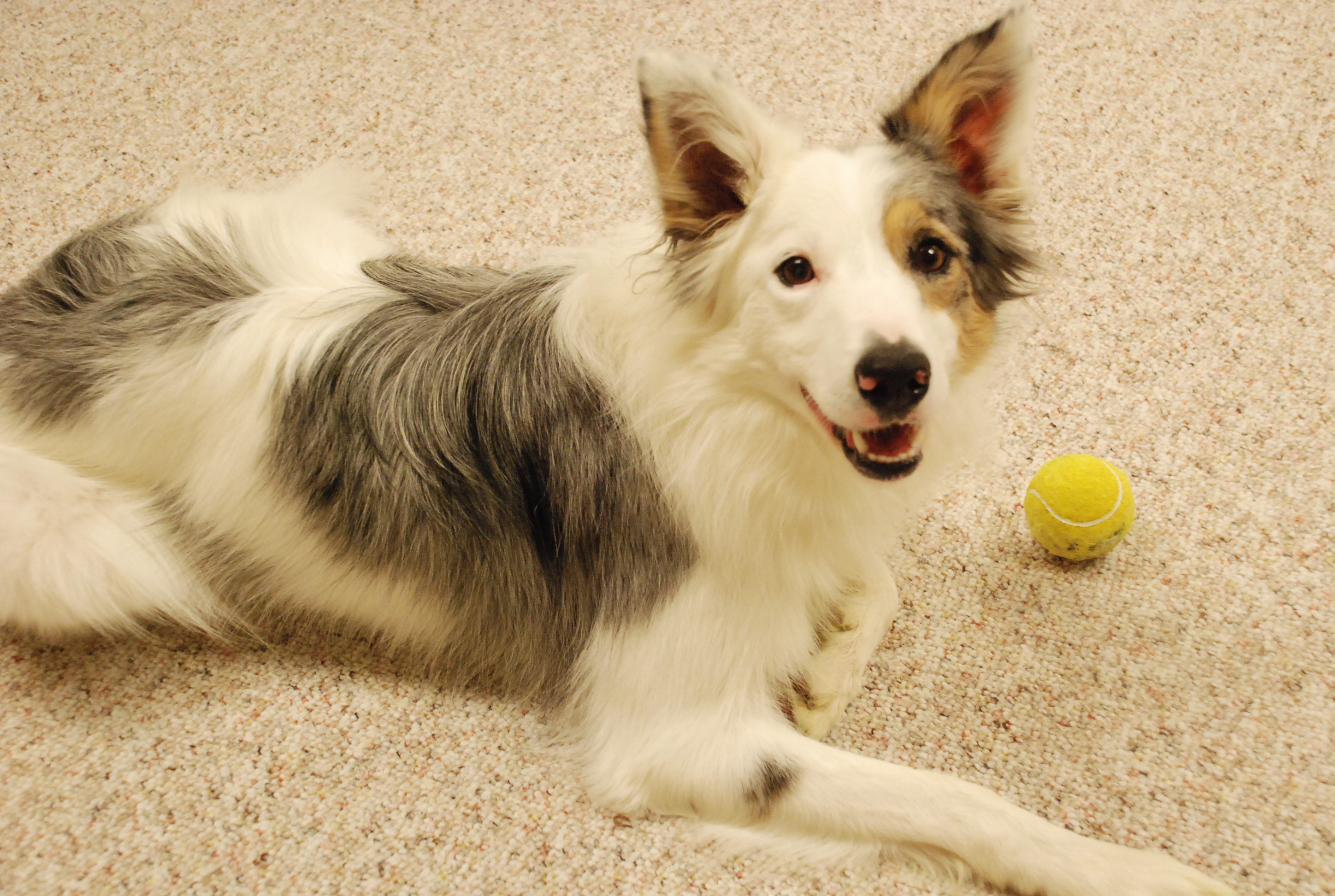
Posted in Your Stories
Tagged border collies, canine good citizen, dog behavior, dog training, socialization, therapy dog
“I want her back to the way that she was,” Mike said. He gave her firm, strong shoulder an affectionate thump. “She was always so sweet, lovable and happy. I don’t know why she’s acting this way.”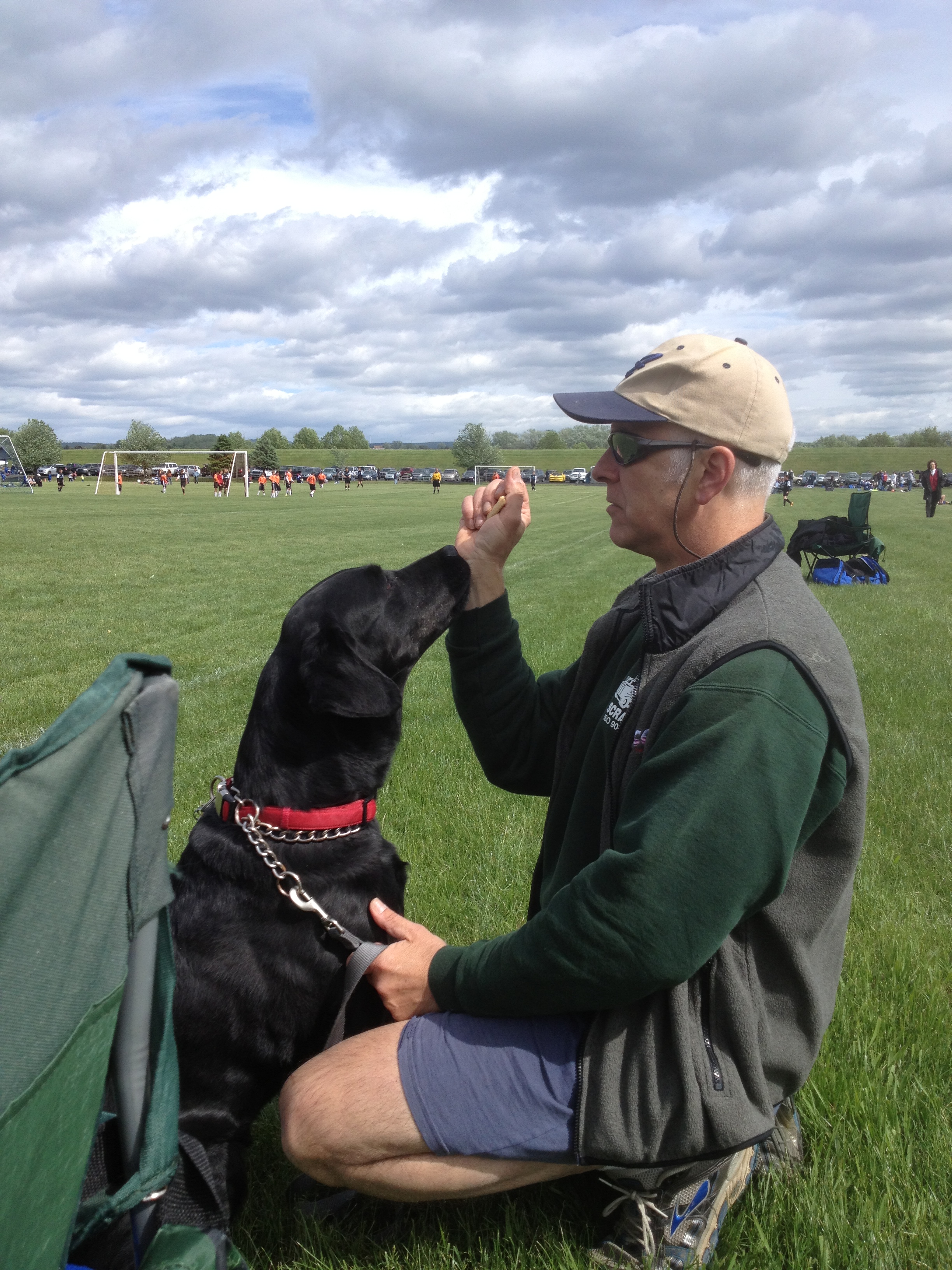
Nala was beautiful, solid black and built like a Labrador retriever with a splash of Rottweiler. Most people would have found her intimidating. She was a big dog, solid, well muscled, and strong. However, whenever she’d wiggle her little nub of a tail, the lower half of her body swayed back and forth like a talented hula dancer. It was her eyes that I remember the most. They were large, round, and dark but her expression was soft. I never felt threatened. In fact as I sat in a chair, she sat in front of me, gazing into my eyes. I felt her sorrow; something was wrong. I slipped my hands underneath of her strong jowls and pulled her head up to mine, our foreheads touching. I moved my hands up behind her ears and massaged with my fingers, and her head relaxed in my hands. Eventually I gently placed her head in my lap and continued to massage her head and neck. She pressed her head into my lap, her body, for the time being, completely relaxed.
“She’s my son’s dog. He’s busy during the summer so she comes to live with us for a few months.”
“Who’s us?” I asked.
“Myself, my wife, son, and three other dogs.”
I asked about the other dogs and Nala’s relationship with them.
 “Nala was a gentle giant. She was always so kindhearted with the small dogs.” The terrier mixes are littermates who are getting older, so they didn’t bother much with Nala, “especially since she’s gotten so intolerant and grumbly with them.” He also talked about a three-year-old male sheltie mix. “Mac is outgoing. He’s a great dog, and we’re running partners. He and Nala always got along just fine. In fact they would often have a great time running around and chasing one another. Now whenever Nala gets aggressive Mac jumps in to intervene. I’m concerned those two might get into a fight if this behavior continues.”
Mike’s son had adopted Nala from the Griffin Pond Animal Shelter in December 2012, when he was home from college on winter break. There was not much information on her, except that she was a stray, listed as a Labrador Retriever. He felt an instant connection to her. She was remarkably gentle and kind. About the time I met her, she was approximately five years old.
Nala now completely relaxed and obviously tired. She lay down on the floor at my feet. I was relieved that she was resting comfortably. “What’s she doing that worries you?”
Mike sighed and folded his hands, staring down at the sleeping dog. “In June of 2013 my son tried to lift her into the bathtub. She snapped and bit his hand. That was so out of character for her.” He shook his head in disbelief. “For a split second, she was a different dog. Of course he wasn’t angry with her.” Mike sat up straighter and ran his hand through his hair. “He figured that she must have been in some sort of pain. That was basically the beginning of the downturn in her personality.” Mike’s brow puckered in worry, but his gaze never left Nala’s sleeping face. “She started growling at us if we disturbed her in any way. She lunged to bite us when we tried to get her off of the furniture. The whole family was bewildered. We hardly knew our sweet Nala anymore.” He paused, looked away for a moment, and blinked. “She used to love to take walks, but now when we try to put the leash on her, she growls. We’re afraid she might really hurt someone. We don’t understand what’s happening with her.”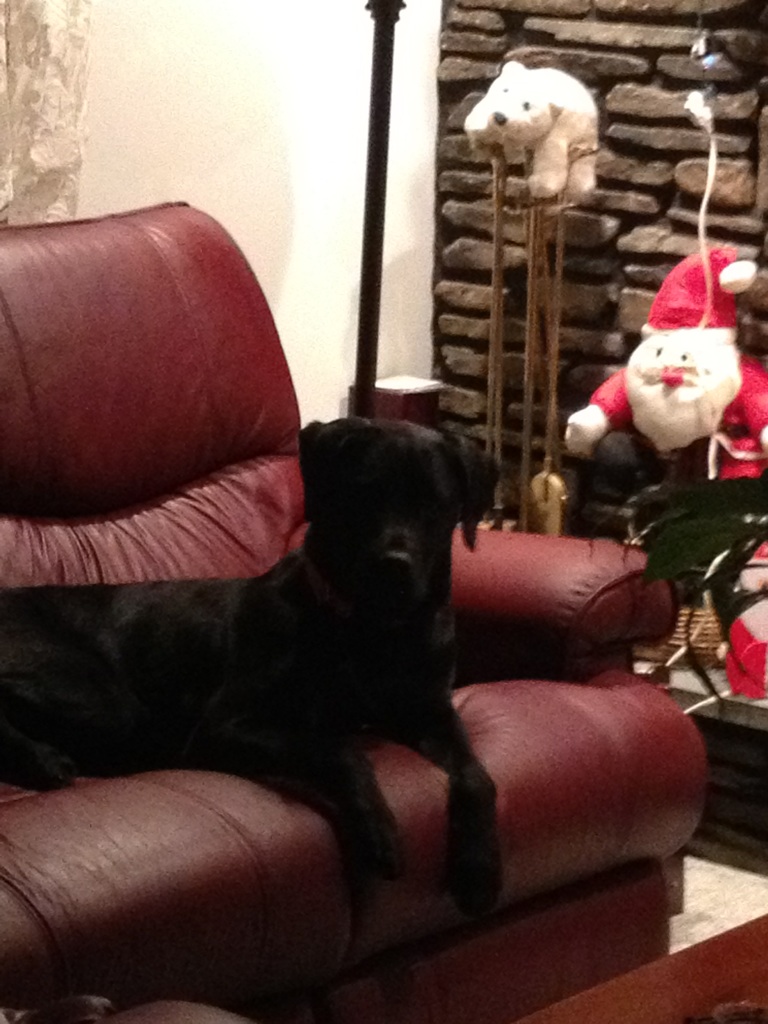
Most behavior problems follow a similar archetype. After listening to Mike’s story of Nala, I couldn’t connect the dots. There was no clear pattern. “The first thing I’ll suggest for you to do is rule out that there isn’t something medically wrong with her. I recommend that you schedule an appointment with your veterinarian before we start any formal training.”
He nodded. “We’ve done that. It’s coming up soon.”
“Good. In the meantime everybody in the family should keep a leash on Nala at all times. That way, if she should threaten anyone, they can safely get control of her. Otherwise, just let her be as much as possible. Try not to do anything that might aggravate her. Let’s see what the veterinarian has to say before we start any training.”
I left the consult perplexed. I couldn’t shake the sinking feeling that something was terribly wrong. As I drove home, I kept remembering the strange and urgent way she gazed into my eyes. It was as if I felt her pain. Thinking about Nala was literally haunting me. 
Posted in Nala
Tagged adopting a dog, Aggression Issues, dog aggression, dog training, obedience, rescue dogs, shelter dogs
By Katherine Dattoma
We were ready ! Early that agility trial morning, with the car packed full of family and dogs, we headed into sunrise and a day full of promise. After years of strategizing master level gambler and snooker courses with Oreo, I should have no problem navigating a Novice level course. Why then, did my nerves tingle and my stomach clench as I set Ginger up before the first obstacle? Much to my surprise and elation, Ginger qualified in her first few classes – and then disaster struck. A fast moving non rubberized teeter had her sliding to the bottom of the contact, where she froze before getting struck in the bum with the rebound. Ginger never fogot a fear or an injury! Agility trials were immediately transformed into terrifying events, and teeters could no longer be negotiated past the tipping point. In subsequent trials, Ginger exhibited a host of reactions. She barked at the judges and bar setters, leaped off the table when a bar setter got up to fluff the chute, fled from the sun glinting through a panel jump slats, fell off the contact equipment if the judge crowded her, lost concentration in the weaves when a bird flew overhead, refused any obstacle that looked scarily “different”, stopped to eat dirt, lost a face off with a horse and her fright levels rose off the meter when a well shaded canopy chair “turned” into a human. Flapping flags, a truck in the ring being loaded with agility equipment, glimpses of movement in the distance through open doors were all potential Ginger eating monsters. My big red girl was still afraid of the world.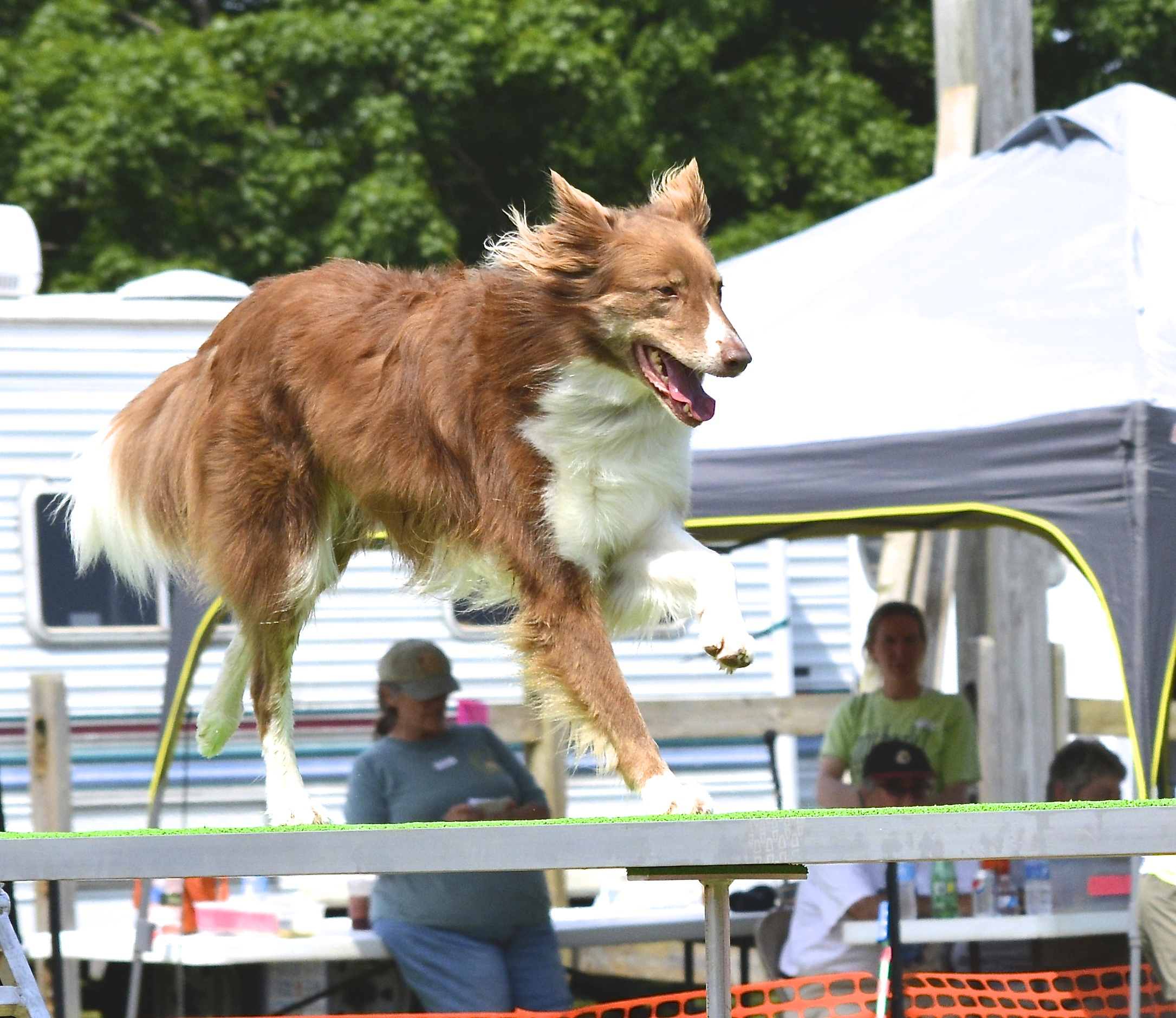
There is an agility subset of stressed dog/handler teams, struggling to complete each course they run, trial after trial, with little improvement. Either I would become a permanent member of this group, or have to quit, unless I found a way to change Ginger’s attitude about agility trials. Clearly, I needed to come up with a new tactic that went beyond dogged persistence, or else I would have to give up all thoughts of making Ginger into that partner I needed to continue competing in agility. Much as he loved agility, Oreo’s career was winding down and I knew his time in the ring was going to come to an end. Making the decision to continue agility with Ginger, I shifted my goals from earning titles and ribbons to simply getting Ginger to enjoy competition.
My strategy to eliminate all stress for myself, and limit it for Ginger was simple. Avoid qualifying! While others were carefully planning their courses during walk thrus’s, I was planning just as carefully with a different purpose. My routes became simple U shapes, avoiding the judge, bar setters and the dreaded teeter . My goal was to complete a small number of favorite, easy obstacles successfully, without giving Ginger time or the opportunity to lose focus. I was relaxed, and for Ginger, the short time in the ring was amply compensated for by the huge jackpot of treats that awaited her. When possible, I introduced Ginger to the judge, walked her around the ring so she would know where to expect the bar setters to be sitting, asked the photographer to step back for her runs, and developed pre run routines that allowed Ginger to filter out distractions by getting up close “in my face”.
She occasionally began to show eagerness to enter the ring, even barking a bit with excitement. It was time to add a few more obstacles, until we were completing entire jumper courses- and qualifying! However, a full standard course continued to elude us due to the inclusion of the teeter. Ginger’s initial teeter training had been a slow and methodical process, beginning with rewarding her for being in the vicinity of the banging sound while other dogs performed on the equipment. A very gradual increase in height and movement had kept Ginger comfortable and confident on the teeter until that first fateful trial. How could I get Ginger back on the teeter when it had proven, after all that early work, to be an object of fear? It moved, it made noise, was unpredictable and every teeter felt just a little different. I knew that a retraining effort would only succeed if I could change how she felt about the obstacle. Somehow, I would have to make it an object of desire- something Ginger wanted far more than she feared.
My thoughts turned back to the tumbling tower of tin cans, that clanking representation of psychological persuasion, and Ginger’s strong desire to join in the fun. Oreo would again be my ally. He loved running over the teeter numerous times, and all the extra treats and frisbee play included. Ginger was initially only allowed to watch. Eventually she was offered one try, and if she chose to bail, training stopped for her while Oreo had another turn. Like a kid, she didn’t want to be left out. At some point, Ginger began to bark and beg to get on the teeter- denial increased the desire! We traveled, learning to enjoy teeters of various surfaces, materials, weights and in different settings.
I was afraid. I still feared a refusal in the trial setting. How would it be possible to retrain after retraining? Ginger finally took the matter into her own paws. The now desirable teeter lured her into an “off course” as I tried once again to run her past it. I had been half a year since our first misfortunate trial, and Ginger earned her first qualifying score in a standard class. Ginger repaid my patience by becoming a very reliable agility partner, qualifying at a prodigious rate. She was still cautious in public, but her consistency was amazing. She never missed a contact or took down a bar, and all off courses were a result of my addled middle aged brain misfiring. Refusals resulting from her trademark startled reaction that we called “skitzing” were becoming rare. Finally, I could shift my own focus towards training myself to become a better handler.
The seasons changed, Ginger’s agility career blossomed, and I faced the painful necessity of retiring Oreo at the youthful age of almost 9. Setting a goal for Ginger no longer seemed impossible and I dared to reach for a big one. Oreo had earned his full share of agility honors, but for many reasons, the AKC Master Agility Championship had eluded us. I had enviously fingered the huge, beautiful MACH ribbons supplied by the Nutmeg Border Collie club at their inaugural trial, and dreamed a dream of possibilities for Ginger. In December, two weeks past Ginger’s fourth birthday, we headed to the last trial we had scheduled trial for the year, prior to an agility time off necessitated by my upcoming knee surgery. In her last run, of the last day of the trial, Ginger soared over the final jump as a champion. We brought home that beautiful big ribbon!
Reflecting back on my travels and travails with Ginger, from a terrified pup to becoming MACH Sweet Ginger Snap, I realize that a relatively small portion of training time was actually devoted to agility. The majority of my focus was on convincing Ginger that the world is a safe, fun place. The bonus was that in some mystical way, I believe that Ginger came to me so that not only could I save a discarded pup’s life, but that she could teach my family and myself lessons about how to find misplaced joy. The many heartaches and tough times my family has experienced these few years past, cannot retain the same power if we avail ourselves of our dog’s special gifts of reveling in the moment. When I picture my Ginger flying like a bird off my brother’s Virginia lake house dock, caught in a snapshot moment of pure pleasure, I know that she has opened a window giving me a little peek into heaven here on earth. Ginger has so much more to teach me, certainly a great deal about patience, but primarily that goals have little value if we can’t make the process of achieving them joyful. Humbled by the love and trust that enabled Ginger to overcome whatever trauma that had trapped her in a debilitating emotional condition, I have been made just a little more human by a mere dog. Striding into the new year on the strength of Ginger’s long legs, I allowed the delight of our agility journey to make my newest dreams sweet.
Posted in Sweet Ginger Snap, Your Stories
Tagged agility, Behavior/Training, border collies, dogs, inspiration, obedience, sheepdogs
At 4 am, I heard Scout barking. Now at a frail sixteen years of age his bark was soft and raspy, but I always had an ear open should he need me. He must need to go out, I thought. But wait, he’s gone. Just yesterday he crossed over the rainbow bridge. I lay there in bed in the dark in the awful silence with my eyes welling up. I felt that gut-wrenching feeling, my anguish still as raw as an exposed nerve. How could my mind play such a cruel trick? I took a deep breath, dried my tears, and closed my eyes. Never mind my sorrow–I wanted to hear his bark, just one more time, so I laid very still, hoping my mind would play that trick again.
The pack had been making adjustments with Epic being gone and now Scout.
He was a rescue from a puppy mill, the best family pet. We dabbled a little bit in various dog sports. Scout’s favorite part of agility was leaving. In obedience class he preferred to hide underneath of a table, and rather than herding sheep he gave it his all to befriend them. His job, as he saw it, was to remind me that it was time for the kids to come home from school. I would let him out the front door, he would wander to the end of our property, position himself at the top of our private road so when the bus pulled up he would meet the kids and escort them home.
He felt the need to be helpful with all children, not just my own.
He and I were down at the lake one day enjoying a hot and sunny day when he heard two very young girls screaming. He ran immediately to them. They were standing in the water up to their waist pointing towards a sandal that had floated out to the deep water. Scout spotted the sandal, swam out, and retrieved it. Once on land he dropped it out of his mouth, giving it back to the girls. They were so amused; they giggled and laughed, picked up the sandal and threw it back in the water for Scout to fetch again.
He never liked to be doted on; however, much to his chagrin, brushing and bathing was not always an option. He was low maintenance, no fuss, no muss, always content.
Scout was the mayor of the pack. He would be the first of my dogs to greet any rescue that I would bring home. He was an extremely good judge of character and helped me a great deal with guiding and training the foster dogs. I had just brought home a German shepherd mix from the shelter at the same time I let Scout go. Foxy, relinquished as a stray, would cower in the corner of her kennel, snarling everyone away. He would have adored her gentle nature but would have taught her that growling at visitors coming into my home was not appropriate.
Even while grieving Scout’s absence I had to work with Foxy, I owed her that. Regardless, she’s coming around. Her adoring wiggly body and happy face has certainly been a pleasant distraction. 
I recently filled the dogs’ box with new toys. Tulley was convinced they were all for him. He would gather as many in he could into a nice neat pile and growl away any of the dogs that he thought might attempt to steal his treasures. Mirk got so frustrated with the constant tension he started to growl back at Tulley. The conflict escalated to a full-blown out-and-out knock-down, drag- out. Fortunately my husband and I were able to end the clash as quickly as it started with nothing more than bruised egos.
This episode would never have happened on Scout’s watch. He was the pack guardian; his motto, “Say No To Violence.” As soon as there was any discussion between the dogs that might possibility escalate, he would jump in between the two antagonists stand tall, growl, and order them to go lie down. Since I no longer had Scout to do the policing, I had to slip on my “trainer” hat and manage the problem.
 I’m not sure I even realized what an essential role Scout played in both of our lives until I nearly lost him to a bout of pancreatitis nearly a year earlier, then a few months later to old-dog vestibular syndrome. The thought of Scout not being a part of my day to day was unfathomable. He took care of my family and I for so many years, life without him was not an option. With the pancreatitis he was so weak. I cooked chicken and rice, begged him to eat and willed him to live. He pulled through, I suspect in attempt to please me. The vestibular syndrome robbed him of his balance. His eyes bobbled back and forth like a pendulum in a clock. Again he could not walk, eat or drink on his own. Once again I was determined to save him. I carried him everywhere; hand fed him, and administered subcutaneous fluids. Friends and family gently planted the seed that it might be time to let him go. No, I wouldn’t hear of it! As before, I willed him back and so as not to disappoint me he came around.
He had become increasingly weak and tired. He had little strength left in his back end and most of the muscle on his body had wasted away. When round three came, this time I knew I couldn’t make better. The veterinarian prescribed a low dose of steroids, the beginning of the end, I knew, but it was nearly Christmas. Surely we could have one more holiday together, and so we did. January came and went and Scout was getting increasingly weaker. By February, I was carrying him up and down the steps, in and out, and he was only eating whatever I would cook special for him. Much to his displeasure I gave him more baths in a month than I think he had in nearly his entire lifetime.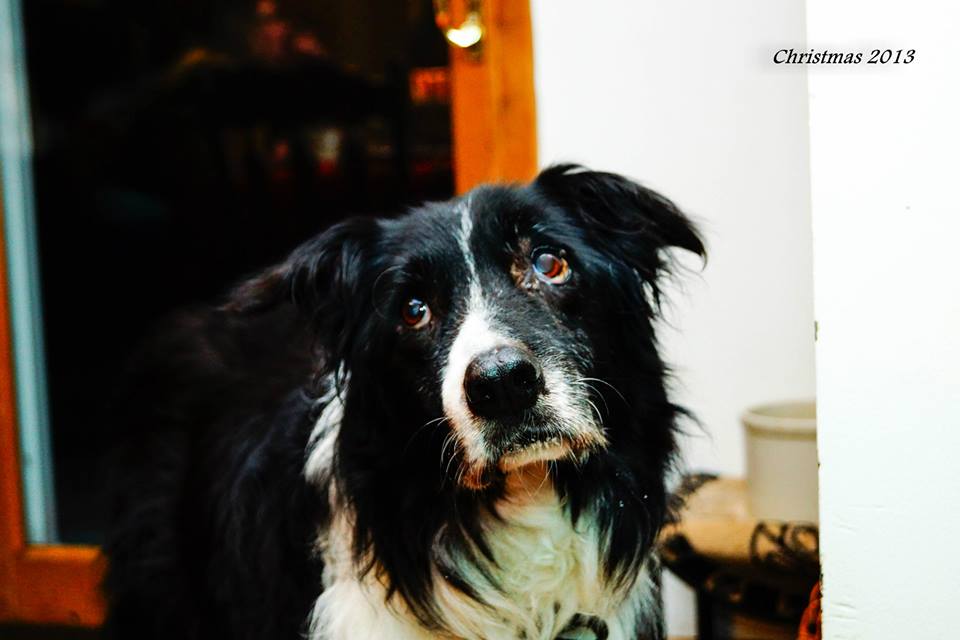
I came home from work one day to find him off his bed, lying on the concrete floor in his own waste. He barely picked his head up to look at me as I scooped his feeble body off of the floor and gently placed him into the tub. As I washed and rinsed his old frail body, I knew he was tired. He had enough. Ironically I had just had a conversation with a friend the day before. She had to let her dog go and wondered if she had done the right thing.
“I’m not sure that letting Wallace go was the right thing to do,” Ellen sobbed. “He had no quality of life, his dignity was gone. Is that how you would have wanted to live?” I reassured Ellen that she had made the best decision she could for her beloved Wallace.
As I washed Scout off in the tub my own words spoken just the day before played through my mind over and over. “I would not want to live this way.”
The next morning I took Scout to our veterinarian, assured him I would be okay, and that it was all right to rest easy. I held him as he slipped away into his deep and peaceful sleep, all the while whispering in his ear what a good boy he was, how much I loved him, and that I would be fine. Once I knew he was gone I lay with him on the floor for a long time and sobbed completely inconsolable.
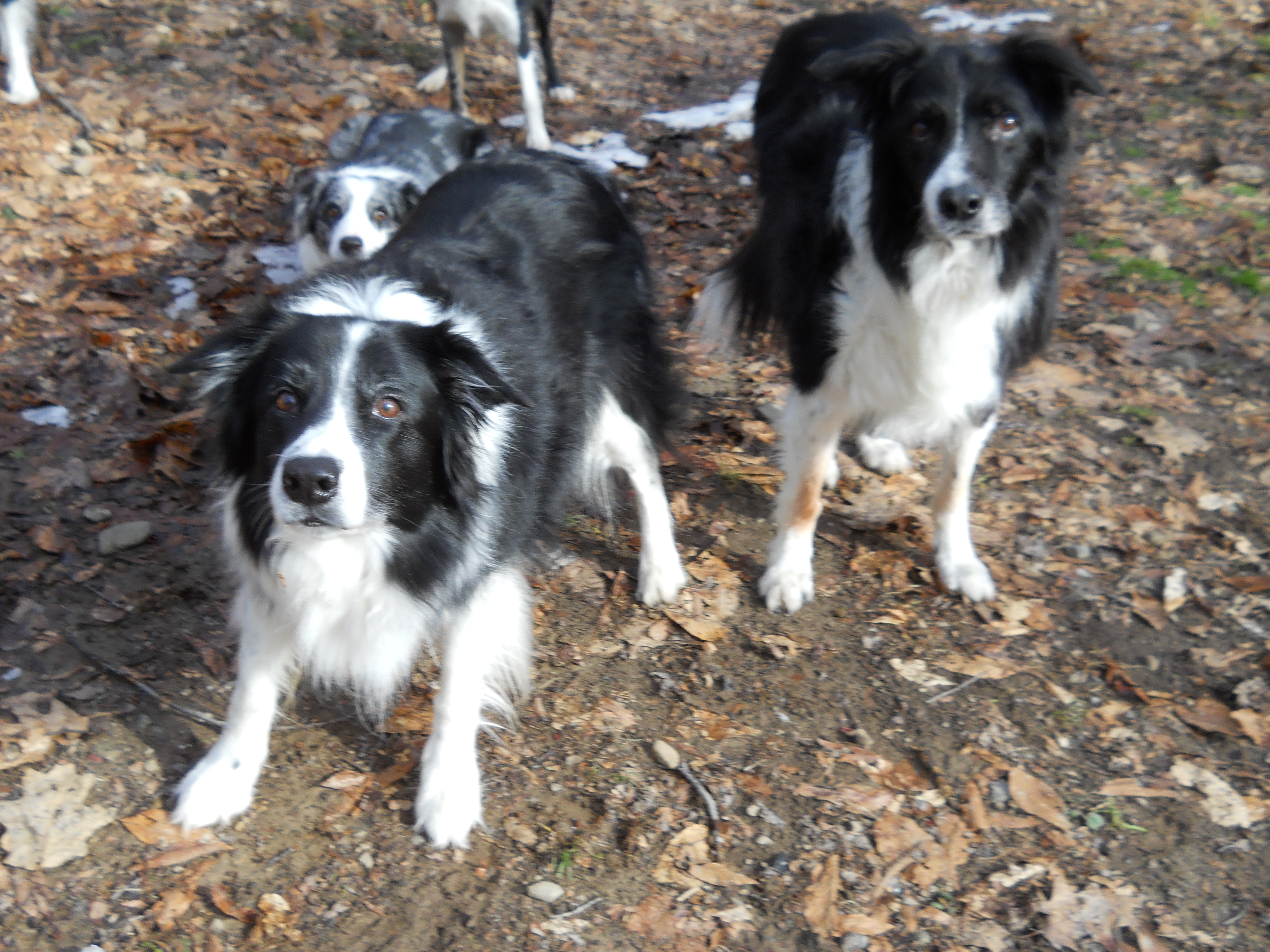
 Scout (pictured front) with the pack.
Posted in The Pack
Tagged border collies, dog pack, dog training, dogs, family, friendship, loss of a pet
It was time. That little itch had grown into something bigger and more persistent. The guilty pleasure I had secretly been indulging in, of sneaking peeks at internet photos of beautiful Border Collies in need of homes, was morphing into a serious search. It was time to add another dog to our household, albeit once again over my husband’s “dead body”!
 Oreo, my first rescued Border Collie was enjoying a full agility competition schedule, but I began to discern subtle signs of trouble before he had even reached the age of six. My eye, uneducated in correct canine conformation, but knowledgeable in evaluating the equine, could see that Oreo’s hind end structure was somewhat, well, odd. All the other wonderful Border Collie quirks and attributes possessed in abundance by Oreo had compensated up to this point, and enabled us to enjoy some small successes undreamed of since my first bumbling attempts at agility. However, I knew my dog’s normal, if somewhat funny way of traveling, and something was off. At that time, the cause of his intermittent, subtle hitch in stride remained undiagnosed, though many opinions and treatments were offered. Sadly, I had to admit that Oreo’s agility career would most likely be cut short.
To the uninitiated it may have seemed like an obsession, but to an ever growing dog sport fraternity, agility is a healthy, wonderful passion. My addiction needed to be fed. I needed another agility dog. Because Oreo had also instilled in me a passion for the Border Collie breed, and our whole family, daughter included, had been formed through adoption, there was never any question as to where I would be looking. References were solicited, home photos taken, and adoption applications sent.
Glen Highland Farm’s Sweet Border Collie Rescue in Morris, New York rehomes a huge number of abandoned and abused dogs each year, and Lillie Goodrich seems to have a knack for placement. On a sunny morning in March of 2008 that glittered with excitement and a late winter frosting of snow, I loaded up husband, the kid and dogs for a visit to the farm. Upon arrival, Lillie took special note of my daughter’s bossy terrier mix bitch, Kimmy, and her controlling antics with long suffering Oreo. She immediately dashed my hopes of meeting a particular handsome young male that had gazed soulfully out of my computer screen. Our little Kimmy was destined to be the limiting factor. Instead, the first dog brought out was a one year old classic black and white female, friendly, agile and altogether lovely in every way. Whoa…. she’d make a great family and agility dog was my first thought, my mind immediately entertaining a fantasy of fame and international events…. Then, presented to me was a red and white, four month old bundle of fur, dangling limply from the assistant’s arms, blinking fearfully at the world. This ragdoll of a pup stole my heart.
The trip home did not auger well for my new choice of a future agility prospect. How was I to successfully integrate a petrified, puking pup into my little agility travel team? What happened to one of my basic requirements, dutifully checked off on the application form, “must ride well in car”? Being lax in my criteria could explain something about those agility bloopers with Oreo. My Sweet Ginger Snap was looking less and less likely to fulfill my agility dreams as the full extent of her fears was soon revealed. Ginger was a textbook case demonstrating that missed social opportunities during the first few months could have a lifelong impact on behavior. Ginger’s reactions to ordinary things fed our imaginations in building a picture of what her first four months on the Maryland puppy mill farm may have been like. And was it genetics, or something far worse that caused her skull to appear misshapen and her face crooked? Men, men with hats obscuring their faces, men carrying objects on their shoulders, people suddenly “appearing” all triggered intense fear reactions. Ginger constantly alternated between leaping away from and attempting to appease human feet with incessant licking, a trait that earned her the first of many nicknames, “Miss Lick”. Any object that moved or looked different from when first observed by Ginger provoked a reaction. A pillow falling off the couch could send her flying out of the room, and she would peer out the upstairs window, barking hysterically every time a package was left on our neighbor’s porch across the street. One of our neighbors inadvertently frightened her as a pup, and because of her fear reaction towards him, he referred to her thereafter as “The Wolf”.
 I needed an agility training plan very different from the trial and error path taken with bold, confident Oreo. My training methods had always been positive reinforcement based, and I knew any attempt to force a behavior with Ginger would be unsuccessful. Clicker training and shaping were a natural fit, both for my ideals as a trainer and for persuading a fearful pup that my goals were really her choices. Because her startle reflex was so easily triggered, Ginger needed to become less sensitive to noise and movement if I ever hoped to get her on agility equipment. She needed to be able to come towards her source of fear to investigate instead of running away. One of the training games I played involved my other two dogs to help motivate Ginger to join the fun. In my basement training area, I set up a tower of tin cans and metal cooking pots. On a push cue, Oreo and Kimmy would happily tip over the clanking pile for a reward. Barking, laughter, treats and curiosity finally drew Ginger from upstairs to the middle stair landing where I would toss a treat. Using the principles of incremental training, I waited for Ginger to choose to dart closer and closer to the action. It was a moment of triumph when Ginger finally offered a nose touch to the offending pile of noisy objects! These early lessons were something I was able to build upon, and today Ginger will often offer an automatic nose touch to an object that initially frightens her.
Surprisingly, at home and in class, Ginger’s agility training progressed very rapidly. She flew through the foundation exercises and fought for her turn when the clicker came out, signaling a training session. On both the plus and minus side, Ginger never forgot anything. Her education on the agility equipment began to follow a pattern of fits and starts, plateauing while we worked on overcoming a fear, and leaps forward evidenced by a desire to correctly repeat any action or obstacle with which she had grown comfortable. She grew rapidly as well… and grew and grew…. Was this the embodiment of having BIG agility dreams? Meanwhile, those long legs just kept getting longer. In spite of too straight shoulders and hindquarters, Ginger outgrew her awkward stage to become an elegant and effortless jumper, who as described by my daughter, ran like a cheetah when streaking across fields in play.
My redheaded fur rag was also growing into a striking, comical teenage drama queen. To the family, “The Wolf” was more of a red headed “Lucy”. The slightest knock had her exaggerating a limp until something else caught her attention, and she would get the sillies each morning, yipping and talking up a storm as she rolled herself in the bed blankets and pillows. She became a master at slinking off with cardboard boxes to shred in private, and would repeatedly catch and bring through the dog door a firefly to play with until she had to, ah….replace it. She could look majestic while burping loudly in our faces, and took over the job of household security by making the rounds checking all the doors, windows and rooms each night before settling . Best of all, Ginger fit seamlessly into our little dog pack, becoming wicked Kimmy’s partner in crime. I brought her everywhere dogs were allowed…into the bank, pet stores and a local book store. While competing with Oreo, I spent countless hours introducing Ginger to all the sights and sounds of agility trials, and frequently introduced her to many fellow agility competitors in an effort to reduce her general fear of humans.
In the early summer of 2009, Ginger was age eligible to enter agility events. The perfect opportunity for an agility debut arrived. The trial was local, held at a site she had visited several times before as a spectator. I sent in the entry, though unsure if Ginger was ready to enter the ring and make her public appearance as an agility competitor. She enjoyed playing agility at home with me, was extremely consistent in her execution of the obstacles, even showing some typical border collie abandon, but remained shy and uncertain in public. It was with nervous anticipation, that I waited for the big day to arrive.
Chase, Part 6
The Remarkable Journey
 Fast-forward to now. Five years have passed since Debbie, Sam, Chase and I made this deal: give our training three months. If it doesn’t work out, I’ll rescue him. Needless to say, Chase has a permanent and loving home! I’m so proud of their accomplishments.
Debbie has also gone beyond my training and taught Chase many playful and clever tricks; she was always diligent in making sure she kept the learning process fun. I was so impressed with their tricks that I invited her to teach a Tricks Workshop at the training center. It’s a great success; the students enjoy the amusing and interactive activities with their dogs. Watch Chase’s video on YouTube, http://www.youtube.com/watch?v=p5XmqxNqFaE&feature=youtu.be.
Chase will always be a work in progress. When Debbie and Sam leave the house, Chase must go to his room. There he finds a yummy interactive toy that keeps his mind occupied for a short while. Now Debbie and Sam can go out the door without Chase jumping and biting at them.
When it comes to interacting with other dogs, he’s still no social butterfly. In fact, Debbie knows that bringing another dog home is not an option. Chase does fine with my dogs so we get together as often as we can. Their interaction isn’t the tumble and play, but rather a coexisting in the same space, running and chasing a ball or swimming in the lake. They have a mutual understanding and know the no-fighting rule. It’s my job to enforce it, so when I suspect one of the dogs is getting a little too pushy, I remind them, “Get out of it!”
When company comes to Debbie’s home, depending on who’s coming to visit and how long they’re staying, she handles Chase differently. Chase is comfortable with older children and adults that he is familiar with. Very young children and infants make him uneasy. Their quick, unpredictable movements, loud high-pitched voices, and crying make him anxious. If the young children stay just for an afternoon, Debbie can manage Chase at the house by keeping him with her on a leash, giving him an occasional time out in his room, and making sure he gets outside often to exercise. When they have out-of-state visitors stay at their home they take Chase to a boarding kennel at the training center. Chase knows the facility very well and does fine with his stay.
The Gentle Leader is a mainstay for walking, because keeping control of Chase’s head and mouth is essential. If he happens to see a squirrel, for instance, he’ll lunge and bark. The Gentle Leader keeps him from pulling Debbie down to the ground. Also, for no obvious reason, he’s not comfortable with certain people. He might grab and bite them. Again the Gentle Leader affords Debbie the head control to keep him from endangering others, and therefore himself.
When it’s time to exercise outside Debbie puts a collar on Chase and secures it to a 30” long line. Chase can never be trusted off-lead unless in a fenced area. While outside on the long line Chase gets to explore, play fetch, practice recall and run. If while on the long lead he encounters a wild animal or a neighbor that makes him uneasy, Debbie can use the, “Leave It” and “Come here” commands. Fortunately Chase is food-motivated and knows that if he immediately returns to Debbie he’ll be rewarded with a mouth-watering treat.
Debbie keeps a crate in her car for travel. Chase jumps right in and lies down quietly. If not for the crate, Debbie would never be able to safely exit her vehicle. Chase gets far too anxious when she or anyone else tries to get out of the car and walk away. He barks, bites, and grabs the clothing of whoever tries to leave the vehicle without him. So as you see, for the obvious reasons, it’s safer for all parties involved that Chase rides in a crate.
His separation anxiety, for the most part, is under control. He no longer redecorates the walls, baseboards, and floors with frantic claw marks. A person leaving the home is still a little bit of an issue, so Sam and Debbie are diligent with the down/stay exercise. Chase is not released from the position until the person has exited the house and driven away.
All in all Chase is a nurturing, sensitive, affectionate, and lovable dog. Even Debbie’s Mom isn’t afraid of him anymore. She brings him a toy every time she comes to visit. He’s so intelligent that you need to spell certain words in front of him, such as “walk,” “ride,” “lake,” “out,” and “training.” He also knows certain  toys by name, like “monster,” “football, “Santa, and “tumbler.”
Chase, has become my buddy. Sometime I look at him and say, “There’s my adorable little bother,” and he wiggles so hard he keels over and shows me his tummy. Debbie and I have also become great friends, a relationship I value very much.
I’m thankful to be a part of this remarkable journey.
In closing Debbie wanted to share her thoughts:
For how frightened I was of Chase, something told me I had to help him. I’m not sure if it was the fear of losing a dog all over again that tugged at my heart, but that was part of it. I think I just knew that if given time and with the right direction we would make it. Chase has taught me so much. I have become a more patient person, I’m more relaxed and learn to be proactive rather than reactive when Chase acts out. Terri has been a godsend for Chase and me. She is so compassionate about animals as well as the people that care for them. If I hadn’t made that call to her, I really don’t know where Chase or even I would be today. Would his next adopter have done the same for him, or would he have just been put down? Would I have adopted another dog, or just given up?
Terri has inspired me to become a trainer and to help people the way she helped us. Chase has come a long way in the last five years, and even though he still has his moments, I can say that I am equipped to handle them. Occasionally I still get a little frightened so I stop take a deep breath and move forward. Chase has turned into a loving companion and we are forever grateful to Terri, her family, and her pack for helping us get where we are today! And as a bonus, we have forged a long lasting friendship!
Thank you from the bottom of our hearts!
Debbie, Sam, and Chase.
Dogs are not our whole life, but they make our lives whole.
Roger Caras
 | Mat Matlack on Meet the Royal Bahamian P… |
 | Albert on Dusty, Part 3 |
 | Lisa Lanser Rose on Mind Your Monks and Scold Your… |
 The Border Collie Inquisitor